June in the Yucatan: Cenotes, Reef, and Everything in Between
June isn't everyone's first choice for the Yucatan Peninsula. Most divers land here in winter, or they come chasing whale sharks in summer, or they wait for the cooler months of January through March. But if you want the right conditions to work the cenotes properly, June makes a strong case for itself.
The tourist numbers are low. The jungle is green after the early rains. And, most importantly for anyone with a camera or a preference for having a site to themselves, you get long stretches of brilliant sunshine that push light down through the cenote openings at exactly the right angles. This month has delivered some of the best conditions I've seen, and we've been in the water almost every day.
A Week With Liz
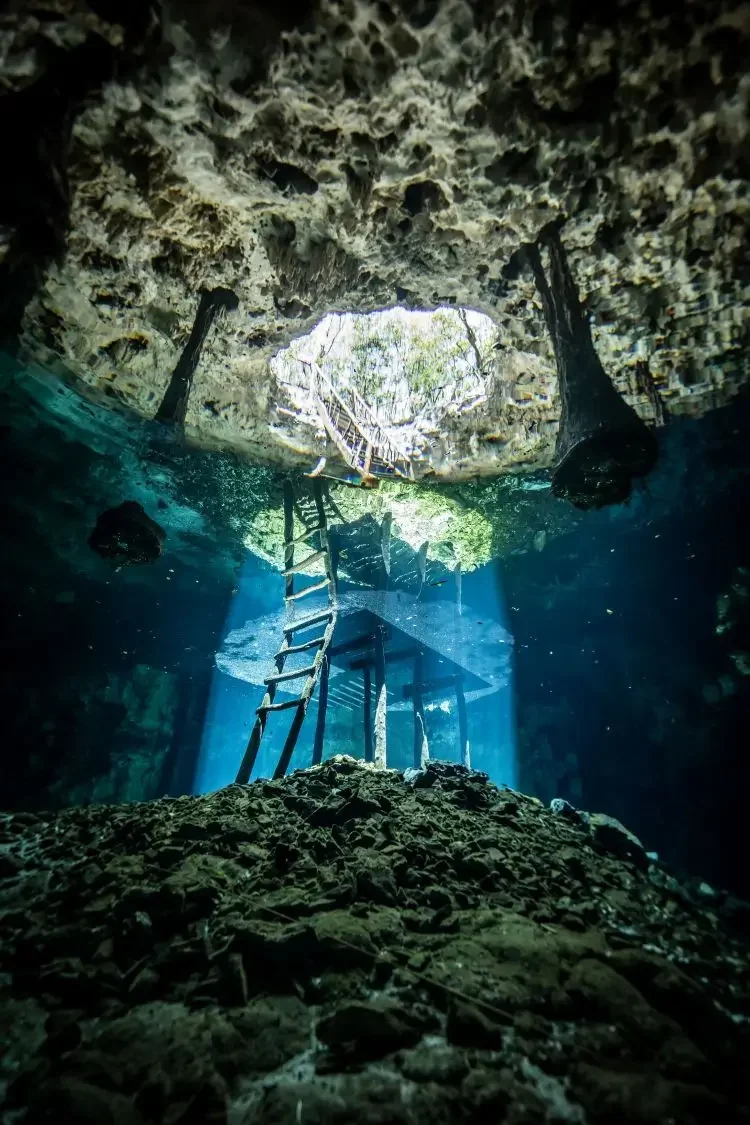
The entrance to La Gloria. Photo @liz.underthesea
The first half of June was all cenotes. Liz, who is an awesome photographer whose work you can see at @liz.underthesea, came over for eight days of diving, and the plan from day one was clear: get back into comfort with sidemount, reintroduce the camera, and make the most of the light.
In fact, we kept the first couple of days deliberately easy. Sidemount takes some adjustment, so adding a camera housing and strobes before you're fully settled in the configuration is a recipe for a dive spent managing gear rather than shooting. We started with dives focused on getting comfortable again, remembering how the rig moves, where everything sits, and staying neutral while holding a camera. No pressure on the shot list at all.
By day three, the camera was back out in anger. We planned each day around the light, because cenote photography lives and dies by the position of the sun above the opening. The halocline, the light beams, the way the water column looks at depth; all of it shifts with the angle and intensity of what's coming through from above. The weather cooperated with a run of clear, sunny days, and Liz flew home with a card full of images that made the planning very much worthwhile. All the cenote images you see on this page are hers, in case you were wondering.
We were also lucky with the crowds, or lack thereof. At several sites, we had them completely to ourselves. No other divers, no waiting, no fins through the frame at the wrong moment. In the cenotes, having a site to yourself can be unusual in high season. In June, it's possible more often than not. Lunch, for the record, was also taken very seriously. I won't pretend the food planning was an afterthought.
The Cenotes Sites We Dived
The four cenotes we focused on were El Pit, Maravilla, Angelita, and Carwash. Between them, they cover most of what makes this part of the Yucatan so worth coming back to.
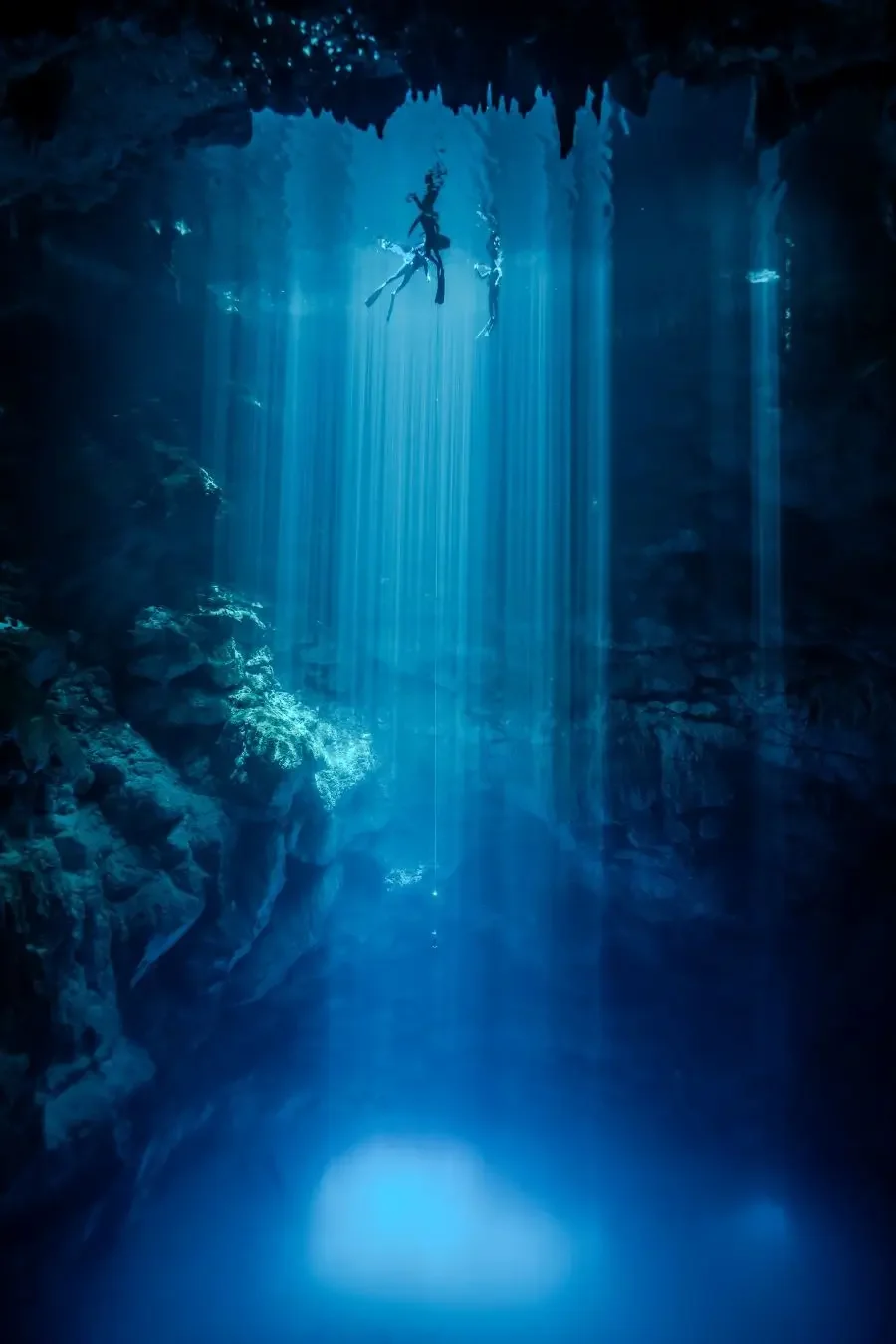
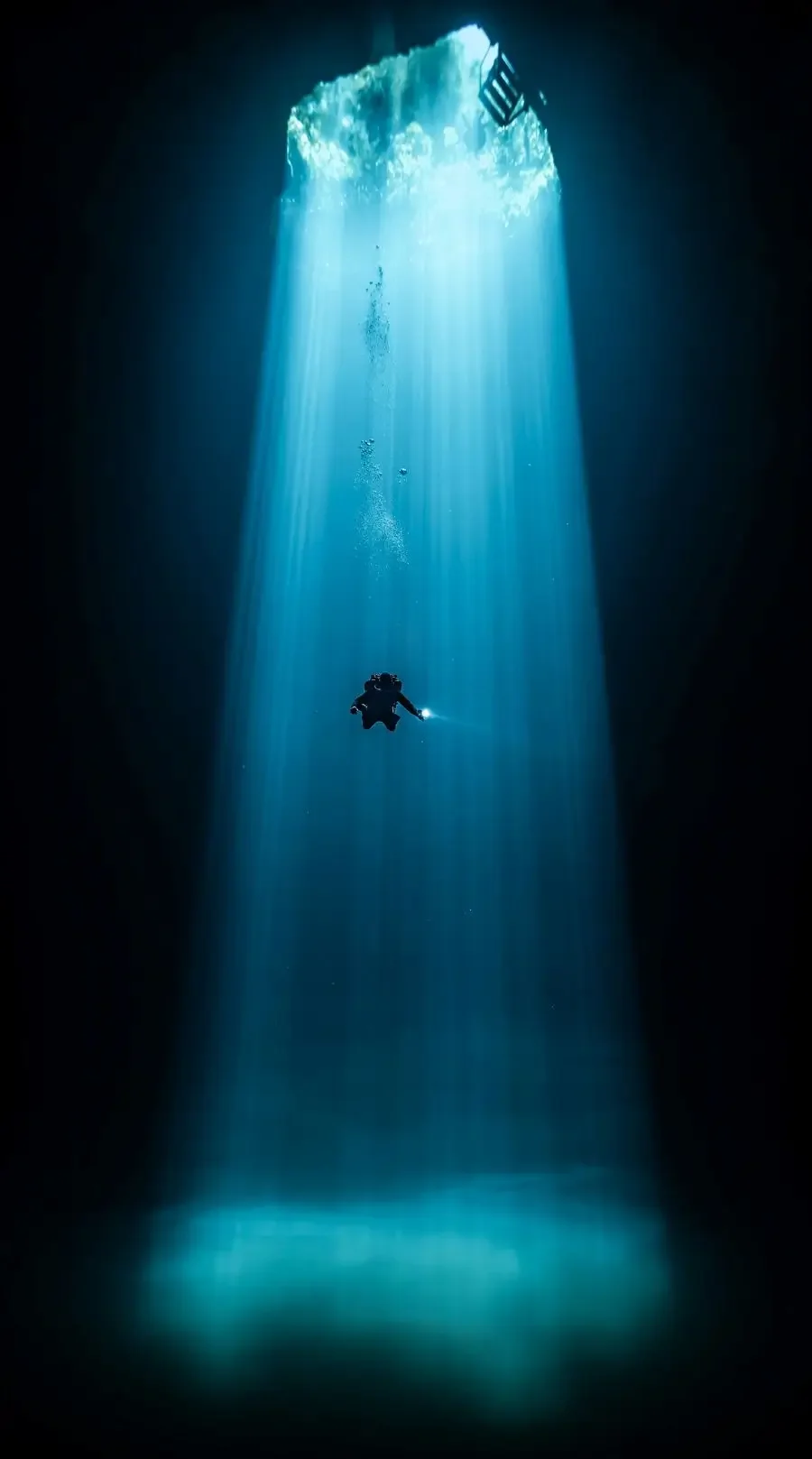
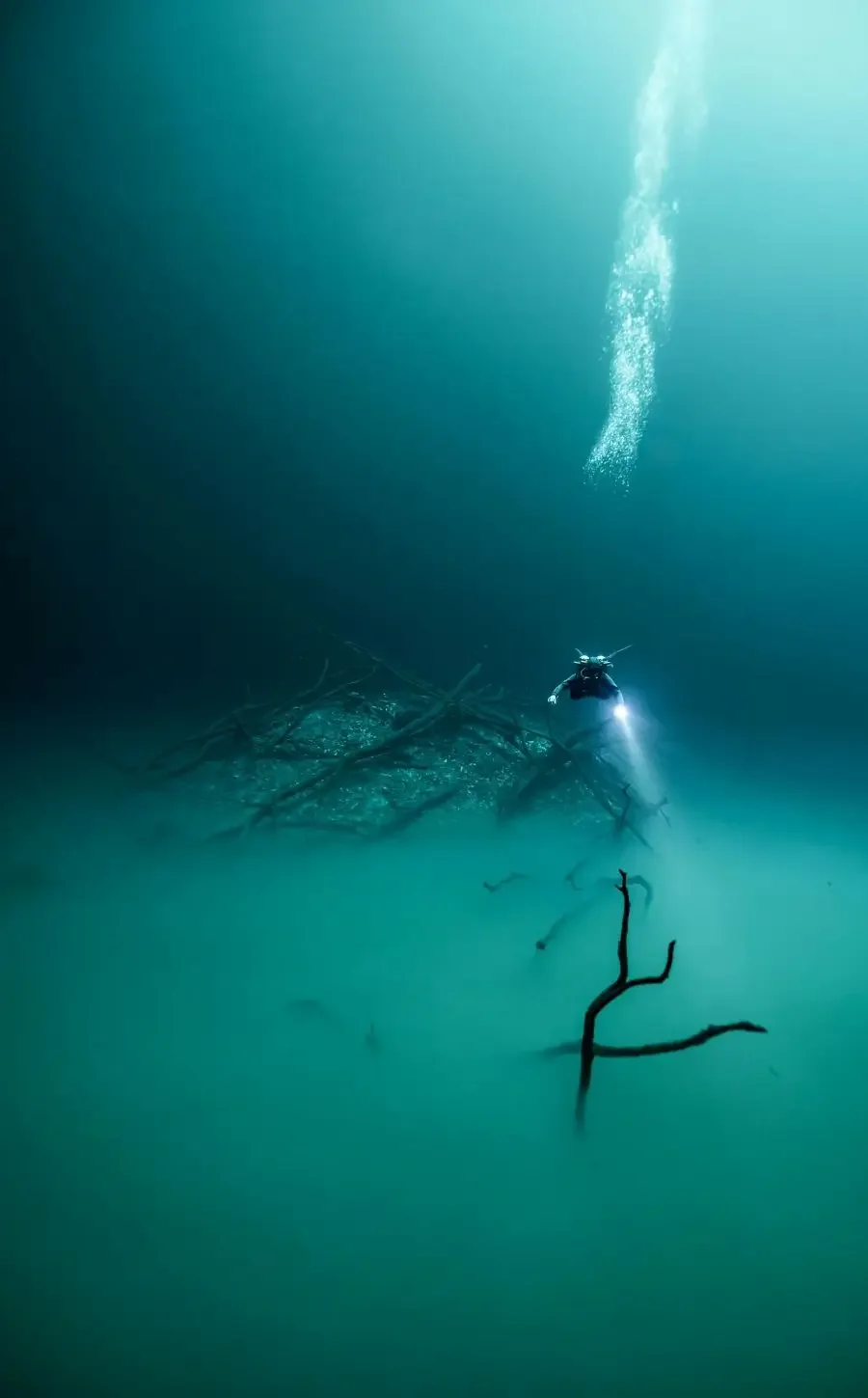
El Pit (above left) is the one most experienced cenote divers want to reach first. The cavern drops to around 30 metres, but the interesting zone sits between 5 and 20 metres. The halocline is at around 12 metres, and below it, a hydrogen sulphide cloud hangs in the water column; a shimmering, opaque layer that catches the light beams filtering down from the surface above. The visibility in the fresh water overhead makes you feel like you're flying rather than swimming. In June, the sun is high enough to push those beams down through the water column through the morning hours, and on a clear day, the results on camera are hard to describe. If you want to understand what's actually happening inside these systems, the geology, the halocline, how the cenotes connect to the Caribbean reef, this piece explains it properly.
Maravilla (above centre) is quieter and more simple in character. More about the big dramatic compositions and less about the detail. Root systems are growing through the ceiling, which gives a unique feel when there’s light coming in at a low angle, grazing the rock. Liz spent a lot of time in there working with natural light, which is where patience is rewarded.
Angelita (above right) is in a category of its own. At around 30 metres, below the halocline, you hit a layer of hydrogen sulphide that sits as a separate visible cloud draped around the trees and branches that have accumulated on the bottom over centuries. Above it, clear fresh water. Below it, saltwater and darkness. It looks like a forest floor suspended in the water column. On a calm morning with no other groups, you get time to actually swim within it, which is when the place really does something to you.
Carwash (known locally as Aktun Ha) is one of the most famous cenotes for photography. The cavern has a wide entrance with light coming in from multiple angles, tree roots visible through the clear water, and every now and then a resident crocodile who has absolutely no interest in you. It rounded out the week well, especially for some of the wider, more atmospheric frames.
Richard Barnden on Away Territory
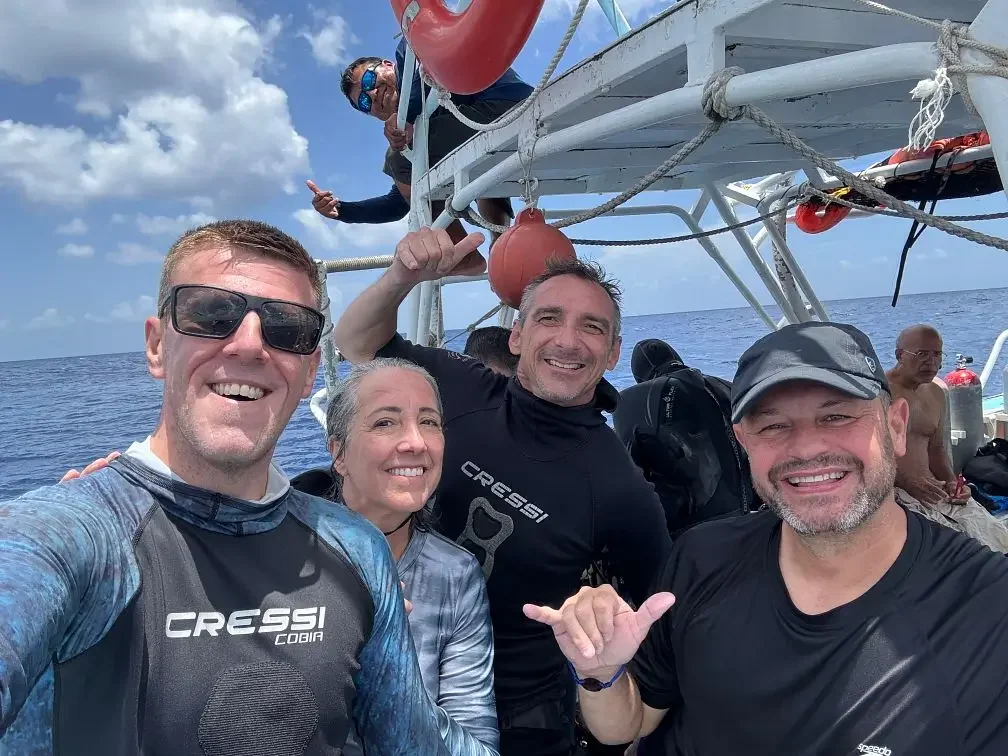
Together again, Luke (left), Allison, Richard (centre) and Chad (right).
Midway through the month, Richard Barnden flew in with a small group, and the programme shifted from cenotes to reef.
Richard is here for a mix of reef diving, whale sharks, and cenotes, but if you know Richard, you know that marine life behaviour that has any biological angle is where he really lights up. He's spent years researching fish spawning patterns, and last year we joined forces aboard Palau Siren for our Moorish Idol Spawning Expedition. What happened at Blue Corner on day five of that trip remains the most biologically concentrated thing I've witnessed as a diver. The full trip report is here if you want the details, but hundreds of Moorish Idols and grey reef sharks in the same place at the same time is not something you easily benchmark against.
We started his group with two check dives in Playa del Carmen to get everyone comfortable. The reefs there are reliable and busy with life. There are moray eels in every other crevice, southern stingrays crossing the sand, a good mix of reef fish, and on the second dive, a hawkbill turtle that spent a solid ten minutes on the same section of reef while the group gathered around it. A good start.
Days two and three took us across to Cozumel, and the conditions were excellent. Visibility out to 40 metres, which makes Cozumel feel exactly as advertised. Santa Rosa gave us a handful of reef sharks working the wall, not the numbers of a spawning aggregation, but sharks on a Cozumel wall in that visibility is a quality afternoon regardless. Day three, we worked through the swim-throughs at Palancar Caves, in and out of the passages along the wall. It takes patience to get right: timing the current, finding the entry points, waiting for the group to clear before following through. That patience is always repaid.
What's Coming Up?
Over the next few days, we're heading out for whale sharks before coming back to the cenotes for a three-day run that the group has been looking forward to since the itinerary was set.
We'll start at Dos Ojos. For anyone in the group who hasn't dived cavern systems before, it's the natural introduction; wide passages, strong light, a good range of depth and complexity without being overwhelming. Then El Pit and Nichte, timed to catch the summer light beams at their best. We'll close on Angelita and Carwash, which, between them, usually round off a cenote programme as well as anything on the peninsula.
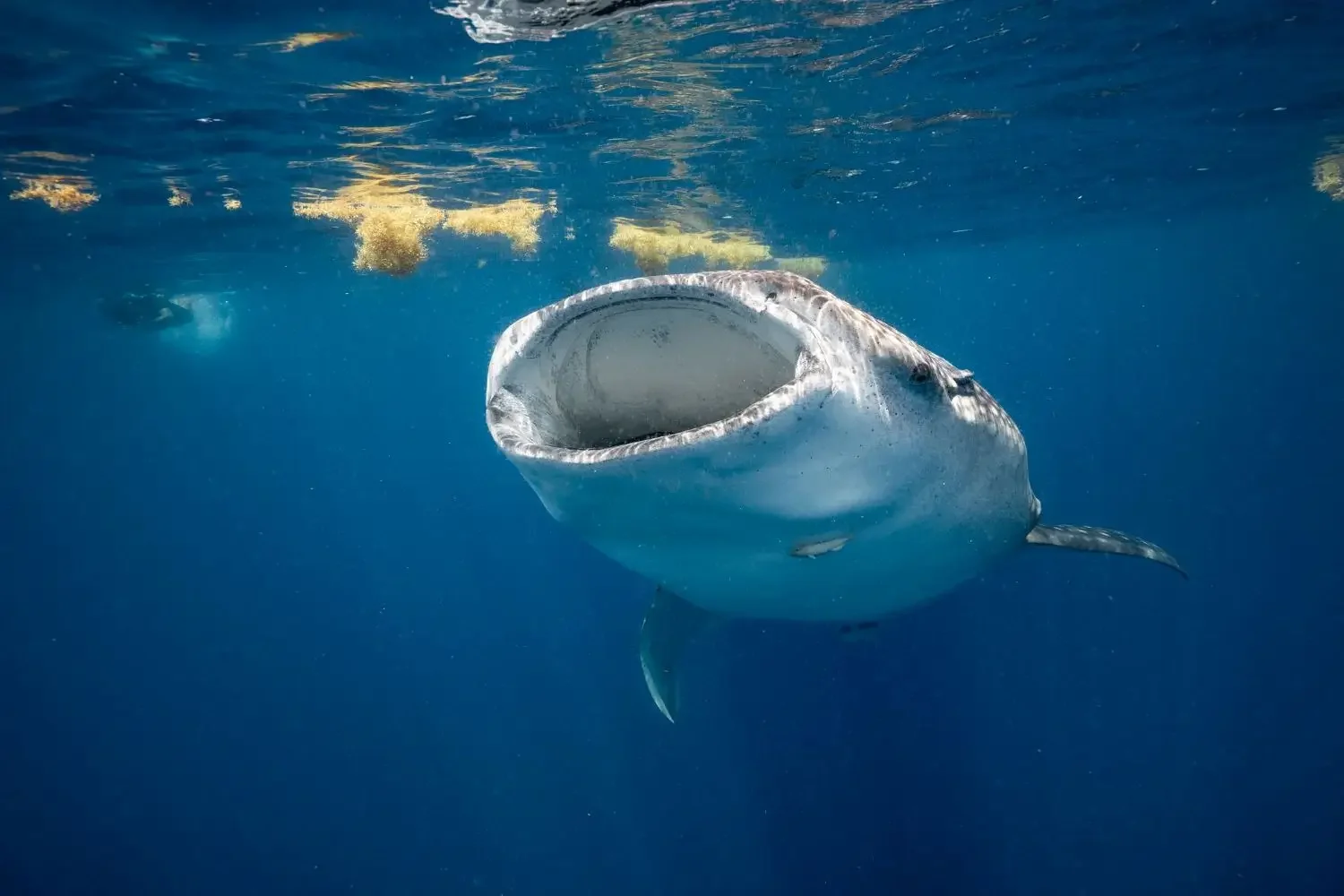
A sneak peek at what’s coming up for us. Photo: Luke Coley
After that, Richard and I are already looking ahead. He's confirmed for the next Palau Full Moon Spawning Expedition in January 2029, back aboard Palau Siren for the Moorish Idol and Red Snapper aggregations. After what happened last year, the bar is set extremely high. I said the same thing before that trip, though, and the ocean delivered. Get the full details of the Palau Expedition here.
If you're thinking about the Yucatan in summer, the conditions right now are genuinely as good as they get for cenote diving. The light, the access, the quiet; it's worth factoring June and July into the conversation more than people typically do. And if the Palau spawning expedition is on your radar, spaces are already going well ahead of departure in 2029. Early is always the right call.