

Giants of the Sea: A Review of the 2026 Baja Whale Spotting Expedition

The engine of our small boat was cut to a low hum as everyone was watching the horizon. Then, from nowhere, a sound that everyone who had joined the trip had been waiting for. A massive, resonant whoosh of air and salt spray erupted just thirty feet away. In that moment, the scent of the Pacific, a mix of brine and cold deep-water minerals, hit us. As the sun began to dip, turning the water into a sheet of hammered copper, a humpback whale cleared the surface in a full, thunderous arc. It hung there for a heartbeat, a forty-ton silhouette against a violet sky, before crashing back into the depths.
That was just the first boat ride out of our 2026 expedition.
Baja California Sur is sometimes referred to as the World’s Aquarium, but even that title feels a bit modest when you’re drifting in a small boat, surrounded by these stunning creatures. At Pixel Expeditions, our 2026 season wasn’t an exercise in checking whales off a list; it was about experiencing the reality of our own scale in the world. Led by our founder, Luke Coley, this journey took us from the rugged Pacific coast to the sheltered inner sea, chasing “The Big Three": the blue, the humpback, and the grey.
About the Expedition: Why Baja?
When people ask why Pixel Expeditions focuses so heavily on the Baja Peninsula, the answer is simple: there is nowhere else on the planet where you can witness this level of cetacean diversity in a single week. Our 2026 itinerary was meticulously planned, drawing from prior experiences and optimised for maximum sightings. The schedule was designed to match the peak migratory window, balancing the Pacific’s acrobatics with the Sea of Cortez’s giants.
Our expedition is guided by a philosophy of conservation, expert leadership, and patience. Rather than chasing whales, we position ourselves along their migration routes with expert spotters, and sometimes we’re lucky enough for the whales to linger with us. This year, our journey spanned from Cabo San Lucas’s lively waters through desert vistas to Loreto, ending in the protected lagoons of Magdalena Bay and Puerto Chale. Coordinating coastal drives, local pangas, and deep-sea vessels, we aimed for the right place at the right tide.
Humpback Whales: The Showstoppers of the Pacific
Day 1 is Cabo San Lucas, and our welcome to the Pacific side of Baja was, well, pretty theatrical. We witnessed full-body breaches where the whales seemed to defy gravity, alongside "pectoral slapping," where they lift their massive, white-bottomed fins and smash them against the surface like a drum.
Above us, magnificent frigatebirds drifted effortlessly on rising air currents, barely moving their wings as they traced wide circles over the boat. Brown pelicans joined the scene, gliding low across the water before plunging headfirst in dramatic dives.
Between whale sightings, bottlenose dolphins gathered in the wake, surfing the pressure wave as if escorting us into their world. These are the moments that bridge the gap between "wildlife viewing" and a "personal encounter."
Why Humpbacks Are The Favourites For Many
Energy: They are the most active and surface-visible whales.
Acoustics: If you’re very lucky and the water is calm, you can sometimes hear their songs vibrating through the hull of the boat.
Tail Flukes: Every humpback has a unique pattern on its tail, like a fingerprint, making them a dream for citizen scientists and photographers.
A Dry Day: The Journey North to Loreto
The second day of our 2026 expedition was a relaxed, scenic drive north along the desert coastline, where rugged mountains met the sea. A transition in every sense of the word. This stretch of highway is one of the most underrated parts of the Baja experience; a place where the rugged, cactus-studded mountains of the Sierra de la Giganta run right into the turquoise edge of the Sea of Cortez.
As the sun slipped toward the horizon, we spent time birdwatching along the shoreline. Seabirds moved through the glowing sky while blue-footed boobies hunted offshore, folding their wings and dropping like arrows into the water. By the time we pulled into Loreto in the late afternoon, the sky had shifted from gold to soft pink to violet, and the calm, unhurried atmosphere set the perfect tone for the evening.
As dusk settled, we headed into town for dinner, carrying that quiet coastal glow with us.
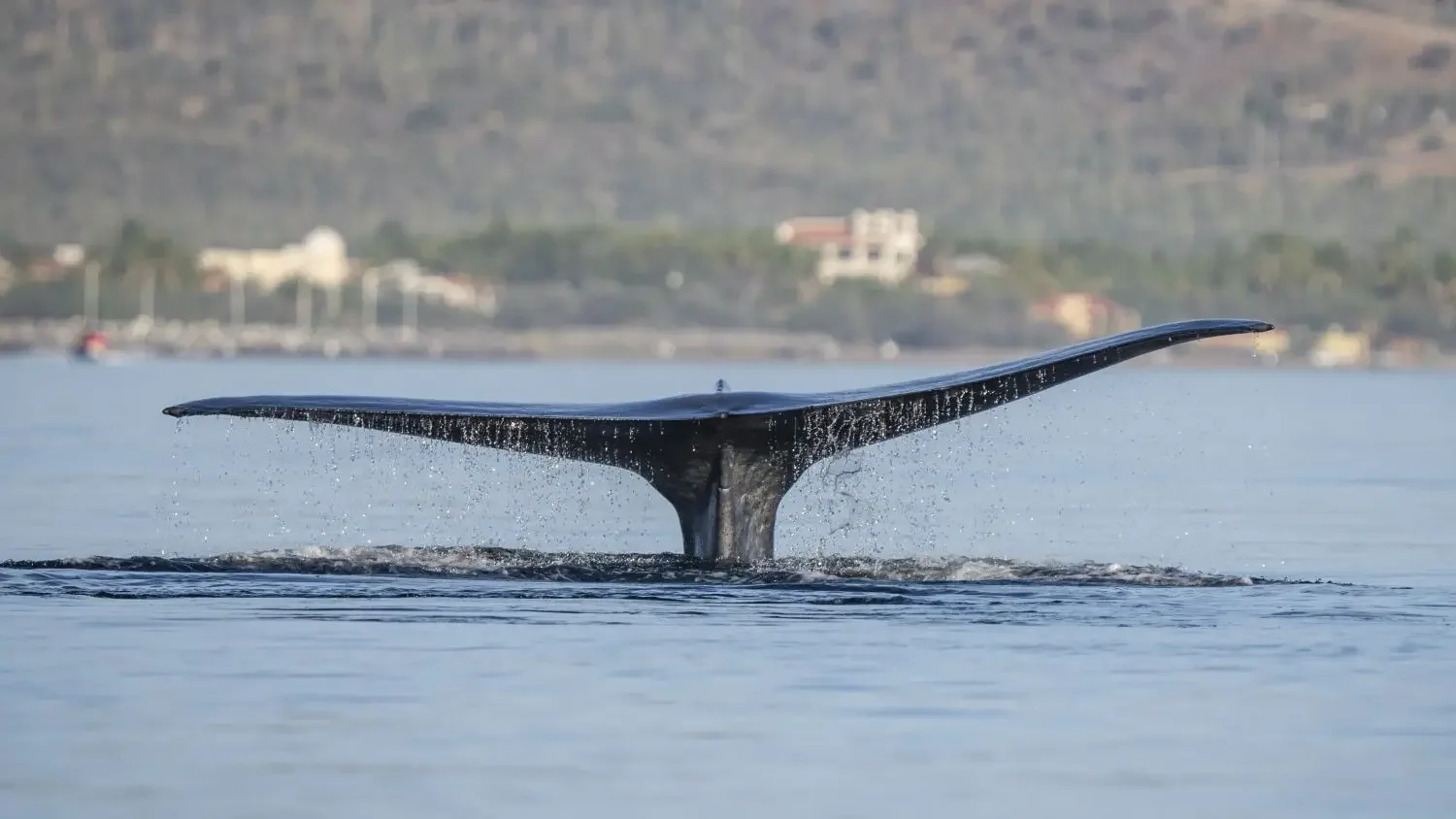
The massive tail fluke of a blue whale emerging from the calm blue waters of the Sea of Cortez. Photo: Luke Coley
Blue Whales: Meeting the Giants of the Sea
There is a silence that falls over a boat when a blue whale is nearby. It’s not boredom, or even expectation, but simply pure, unadulterated awe. On Day 3 of our expedition, leaving the historic shores of Loreto after watching an incredible sunrise, we found ourselves on glassy, mirror-like water. Then, the first spout rose, a vertical steam-like plume of spray reaching thirty feet into the air.
Blue whales are almost impossible to process visually. You see a back emerge, and you wait for it to end, but it just keeps going. The textured, mottled skin looks like weathered stone. During this trip, we encountered six different individuals in a single morning. At one point, we simply drifted, eating burritos in total silence, surrounded by the largest creatures to have ever existed.
Just to add to the surreal nature of the day, a fin whale, the second-largest whale species on Earth, also passed through, moving with sleek, powerful speed. Between sightings, a Cocos booby appeared offshore, a special sighting that added another memorable moment to an already extraordinary morning.
Tips for Spotting Blue Whales in Loreto
The Spout: Look for a tall, straight, and powerful columnar blow. The sound will alert you if you happen to be looking in the wrong direction.
The Colour: Beneath the surface, they glow a luminous, neon turquoise; a stark contrast to the deep navy of the Sea of Cortez.
Timing: Mid-February to March is the sweet spot for the Loreto region.
Photography Note
When shooting blue whales, don't just zoom in on the dorsal fin. Use a wider lens to capture the scale of the whale relative to the horizon or the boat. It’s the only way to convey their true size to someone back home.
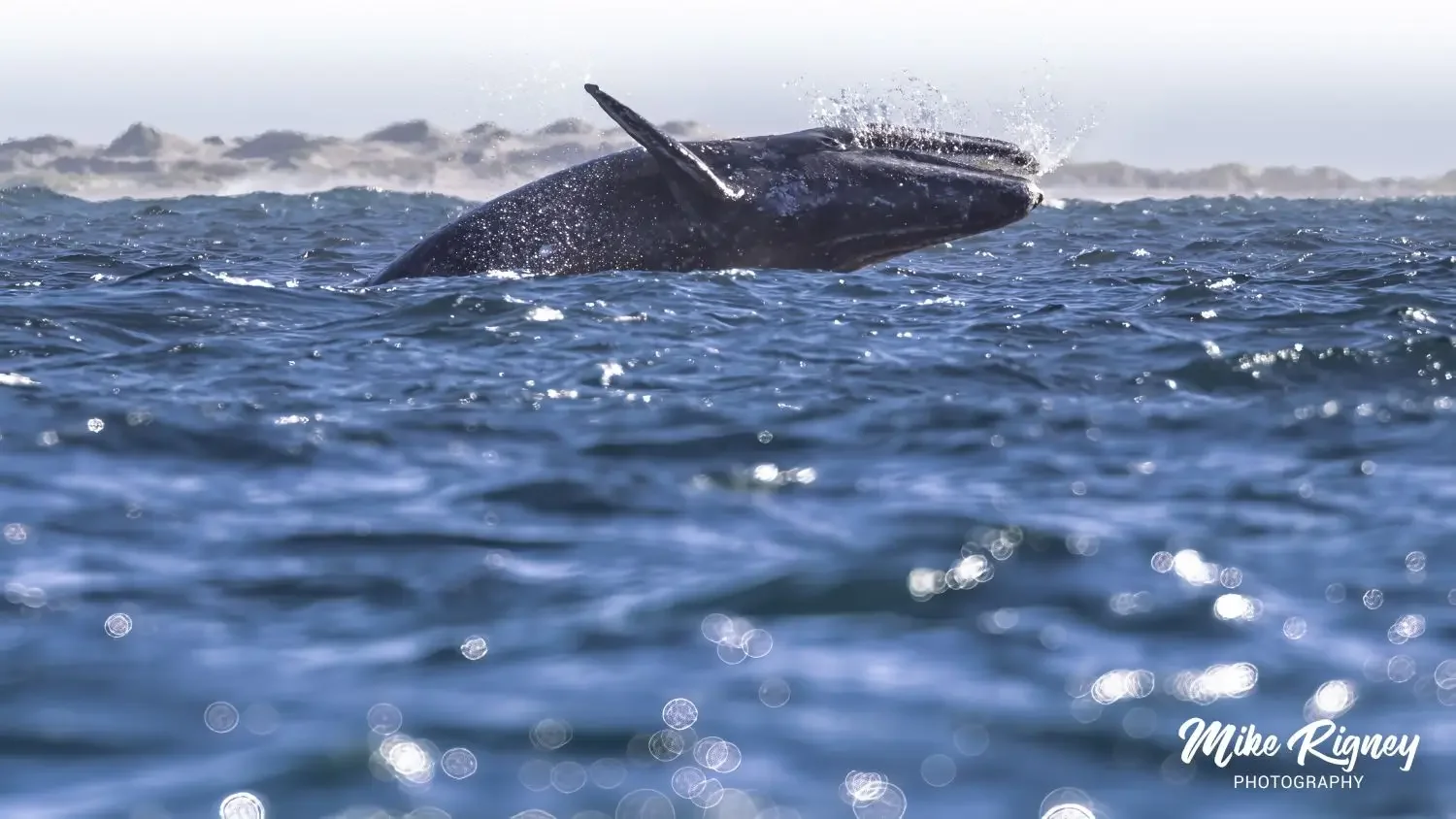
A grey whale breaching the surface in Magdalena Bay. Photo: Mike Rigney
Grey Whales: The Gentle Travellers of the Lagoons
As we moved into the sheltered waters of Magdalena Bay and Puerto Chale on days 5 and 6, the vibe shifted. Here, we met the grey whales. This species is famous for its 12,000-mile migration from Alaska, but in Baja, they come for the abundance of food and the safety of the shallow lagoons to give birth and nurse their young.
In Magdalena Bay, several grey whales appeared throughout the morning, their mottled bodies rolling at the surface as they travelled through the lagoon. It’s a profound testament to conservation; these were the same animals once hunted to near-extinction in these very lagoons. Today, the local fishing communities, like those we visited at the nomadic fishing camps, are their primary guardians.
Throughout the day, we added several more bird species to the trip list, including bald eagles and belted kingfishers, their presence adding another layer of richness to the island environment.
Puerto Chale delivered an experience that felt almost surreal. There were easily more than fifty whales in our field of vision at once. Grey whales are known as the friendliest of whales, and for good reason. They often "spy-hop", lifting their heads vertically out of the water to check out what’s happening in the area… or simply to check out the humans on the boats. In fact, several approached the boats with calm curiosity, creating stunning moments of unexpected connection.
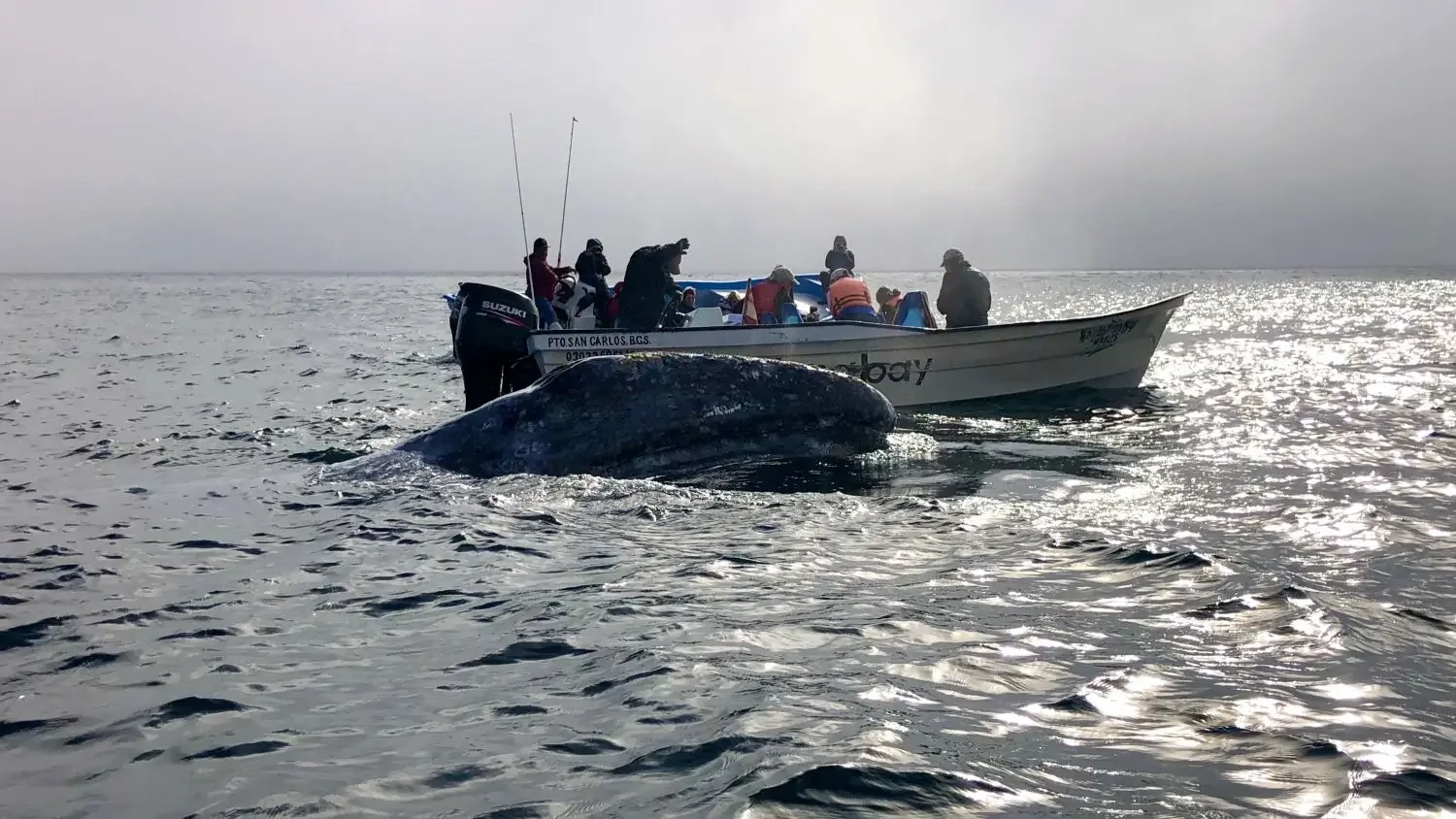
A friendly grey whale lifting its head out of the water to look at passengers on a Pixel Expeditions boat in Mexico. Photo: Luke Coley
The Overall Experience: Life on a Pixel Expedition
A whale-watching trip is more than just the minutes spent looking at a blowhole. It’s the "in-between" moments that define the journey. Our 2026 season was a sensory blend of desert and sea.
The Routine: We started with sunrises that turned the sky into a palette of violet and gold, followed by hours on the water. Evenings were spent in local towns like Loreto, sharing stories over fresh seafood and blue corn quesadillas.
The Landscape: Baja isn't just water. We spent time climbing wind-sculpted sand dunes and navigating quiet mangrove channels filled with belted kingfishers and bald eagles.
The Wildlife Beyond Whales: We encountered pods of bottlenose dolphins surfing our wake and also included a visit to a sea lion colony where thirty juveniles decided to use our boat as a prop for their underwater gymnastics.
The Reality Check: Wildlife travel isn't always a postcard. There are long drives through the desert, the occasional bout of seasickness, and the sun is relentless. But the payoff, seeing a blue whale surface meters from your boat, makes every bumpy road and salty splash worth it.
Tips for Future Travellers
If you’re looking to join us for the 2027 season, here is what you need to know:
The Best Season
While whales are present from December through April, the February to March window is the real Goldilocks zone, and that’s when we will be there. This is when the blue whales are most consistent in Loreto, and the grey whale adults and calves are most active in the lagoons.
Packing Essentials
Layers: The Pacific breeze is cold, but the Baja sun is hot. Bring a high-quality windbreaker and moisture-wicking base layers.
Optics: 10x42 binoculars are the standard for scanning the horizon.
Sun Protection: Polarised sunglasses are non-negotiable; they cut the glare so you can see the whales under the water before they surface.
Wildlife Etiquette
We follow strict proximity rules. We never approach a whale head-on or cut off its path. We wait for the animals to dictate the terms of the encounter. This respect is why the whales in Baja are so calm around Pixel boats.
Reflection: Why We Do This
As we sat in Cabo San Lucas on our final evening, finishing off a plate of local tacos and a mezcalita, the group was uncharacteristically quiet. There is a specific type of exhaustion that comes from a week in the sun, but it’s outweighed by a sense of perspective.
Seeing a Blue Whale doesn't just make you feel small; it makes you feel part of something incredibly vast and worth protecting. At Pixel Expeditions, we don't just want to show you a whale; we want to show you the health of our oceans and the beauty of a world that still has room for giants.
Are you ready to see the giants for yourself?
Frequently Asked Questions
When is the absolute best time to see whales in Baja?
While the season runs from December to April, mid-February through March is the real sweet spot. This is the window when the migratory paths overlap: the grey whales have settled into the lagoons with their calves, the humpbacks are active in the Pacific, and the elusive blue whales are most consistent in the Sea of Cortez near Loreto.
Can we actually touch the whales?
In the lagoons of Magdalena Bay and Puerto Chale, grey whales are famous for their ‘friendly’ behavior, often approaching boats to initiate contact. While we follow strict SEMARNAT regulations to ensure the animals' safety, if a whale chooses to approach and linger alongside the boat, it can lead to a legal and ethical close-up encounter. We let the whales dictate the terms. It is always their choice.
What should I pack for a day on the water?
Baja is a land of extremes. You’ll want layers. Mornings on the water can be surprisingly chilly and windy, while the afternoon desert sun is intense. Essentials include:
A windproof/waterproof light jacket.
Polarized sunglasses (to see through the water's surface).
Reef-safe sunscreen.
A wide-brimmed hat with a chin strap. Be aware, the "Baja Breeze" has claimed many a baseball cap!
Will I get seasick?
The Sea of Cortez is generally much calmer than the Pacific side, often referred to as the world's aquarium for its glass-like conditions. However, the Pacific side can have some swell. We recommend anyone prone to motion sickness take preventative measures (like ginger tablets or Dramamine) the night before and the morning of the trip to ensure you're focused on the whales, not the horizon.
Is this trip suitable for children or seniors?
Absolutely, though it requires a moderate level of mobility. Our Panga boats are sturdy but involve stepping from a dock or beach into the boat. Most of our days are spent sitting and observing, making it a great multi-generational adventure. We’ve had everyone from 10-year-old budding marine biologists to 80-year-old photography enthusiasts join us!
