

There’s a lot to see in Mexico; in fact, there’s a whole lot to see only in the Yucatán. But we can bet that you haven’t heard of most of it. You'll have heard the pitch, though, in fact, you might have even done it. The 4 am alarm, the four-hour coach ride, the umbrella-waving guide, and then it’s there: Chichén Itzá. Honestly, it’s magnificent and ancient. But it’s often surrounded by 5,000 other people baking in 40°C heat. And there’s always someone asking if this is the same pyramid from the Indiana Jones movie.
There's nothing wrong with visiting Chichén Itzá, of course. It's a genuine wonder, and we visit it ourselves. But if that's the Yucatán you've experienced, or are expecting, we'd gently suggest you've only seen the cover of a very long, very extraordinary book.
The real Yucatán Peninsula is a living, breathing labyrinth of jungle, turquoise water, ancient stone, and wild creatures that don’t have a gift shop. It's a place that takes time, not a day trip, not a bullet point on a package tour, to begin to understand. That's why everything in this guide comes from our 5, 7, and 12-day expeditions, or our dedicated experiences. Because one day just isn't enough to get the soul of this place.
Here are ten experiences that prove it.
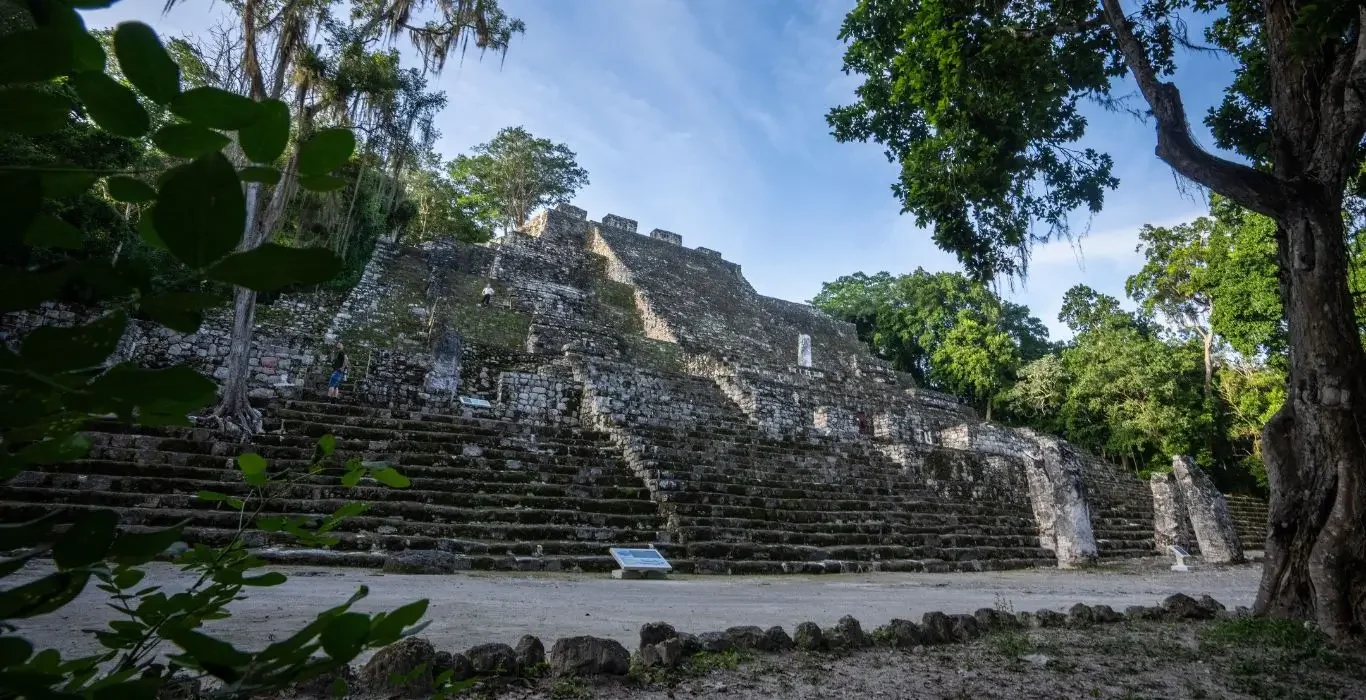
The Gran Pirámide at Calakmul. Photo: Luke Coley
1. Calakmul: The Jungle King
There are UNESCO World Heritage Sites, and then there's Calakmul; a place so vast and so forgotten by the tourist trail that it feels almost illicit to walk through it.
To get there, you drive for an hour through the Calakmul Biosphere Reserve, one of the largest tropical forests in the Americas. The trees close over the road like a cathedral vault. You might see a coati or an ocelot crossing the track, and by the time you arrive, you've entered a different world.
Climb the Gran Pirámide, the site's great pyramid, and the view from the top is unlike anything else in Mexico: an unbroken sea of green canopy stretching south into Guatemala. No city silhouettes or parasols. Just jungle, as far as the atmosphere will let you see.
The only "crowds" at Calakmul are the Howler monkeys, and they will absolutely make you aware of their presence. Their roar carries for miles through the trees, a sound somewhere between a lion and a freight train, and it will be the strangest alarm clock you've ever enjoyed.
Best suited to: 7-day and 12-day Peninsula Expeditions
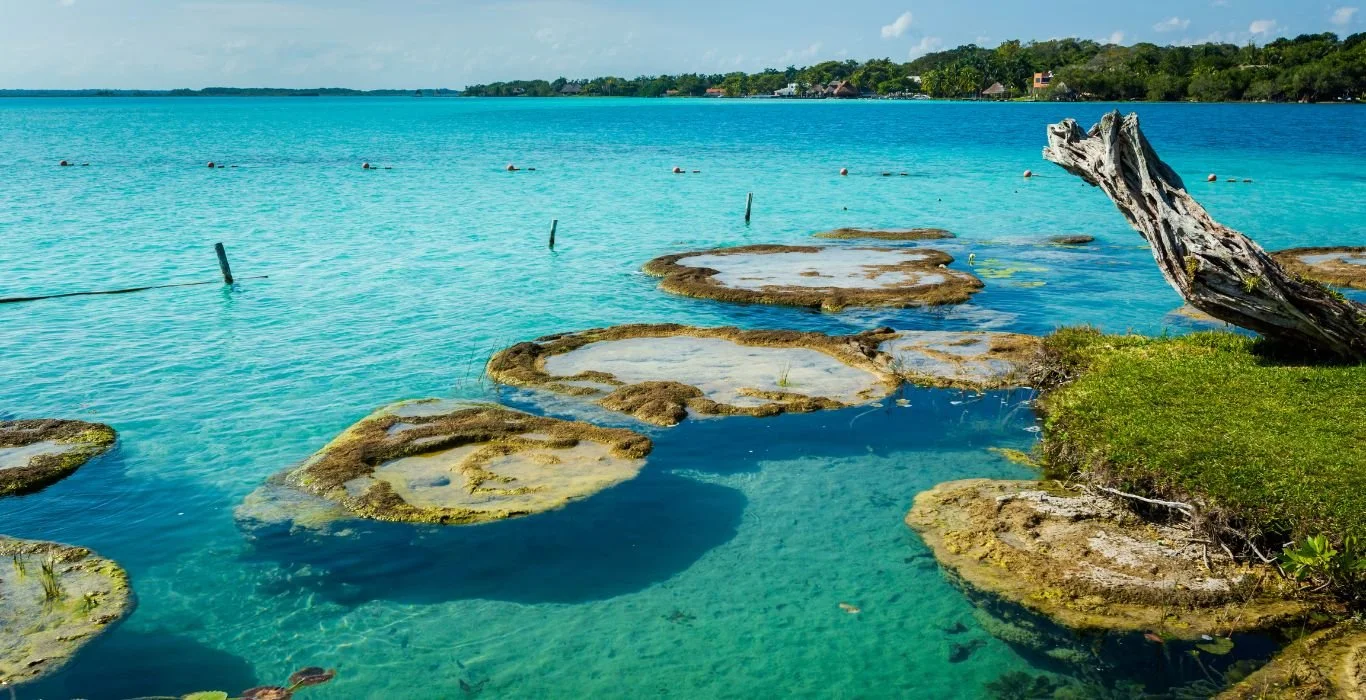
Stromatolites in the turquoise shallows of Bacalar Lagoon
2. The Blue Shades of Bacalar
Bacalar is often called the "Lake of Seven Colours," and truly, the marketing isn't lying. The lagoon shifts from translucent turquoise in the shallows to a deep, almost impossible indigo in its depths. There’s something about the refraction of light through extraordinarily clear freshwater that makes your brain struggle to accept it as real.
But here's what the Instagram grid doesn't tell you: Bacalar's most extraordinary residents aren't the colours. They're the stromatolites, dome-shaped microbial colonies living in the shallow waters that are, essentially, the ancestors of all complex life on Earth. They've been building these rocky mats for 3.5 billion years, so being near them is as close as you'll get to touching the beginning of biological history.
As there is a focus on the birds, we tend to visit with kayaks, keeping our distance from the crowds. You float in water that looks like the Maldives, and you come away with a quiet sense that you've witnessed something ancient.
Photography Tip: Early morning, before the wind picks up, the surface is a mirror. The light is warm, the party boats are asleep, and the birds are active. This is your window.
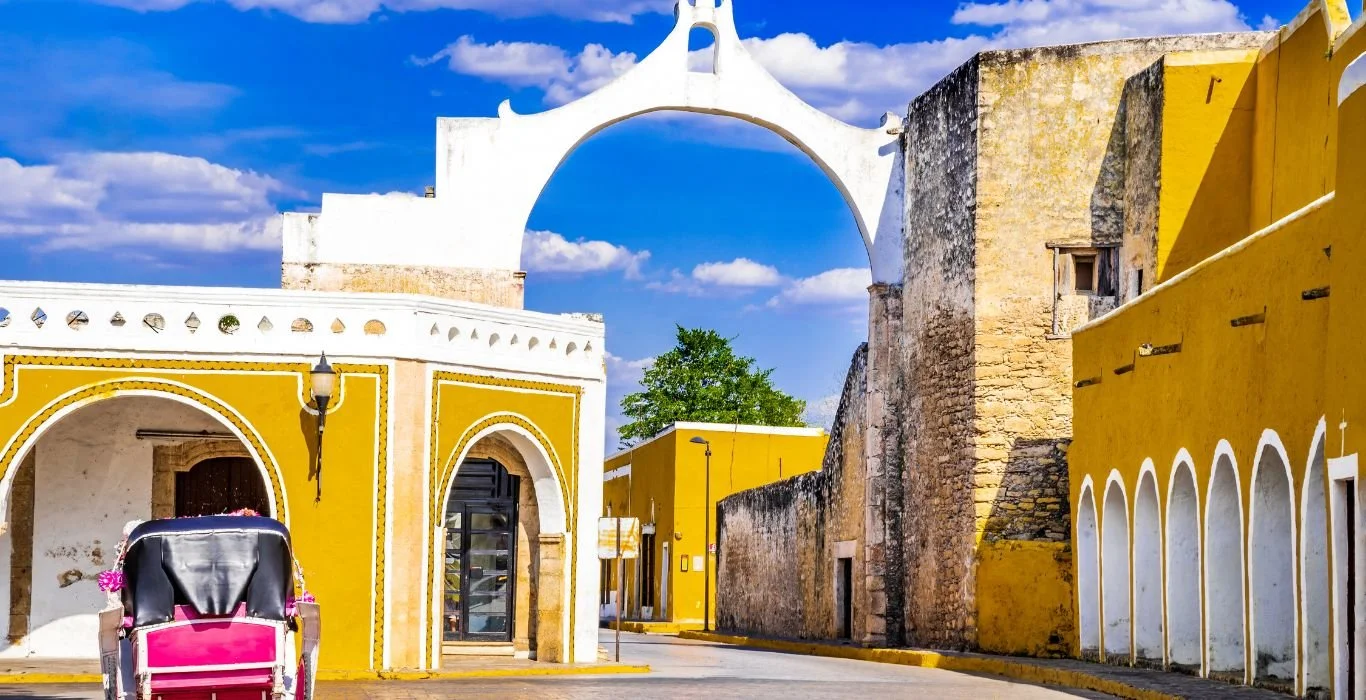
3. Izamal: The Yellow City
Izamal is a town where large swathes are painted in a shade of ochre yellow so vivid that, on a cloudless day, it looks like it's been lit from within. The story goes that it was repainted this colour for Pope John Paul II's visit in 1993, and the residents simply… kept it. Whatever the origin, the effect is extraordinary.
At the heart of the city sits the Convento de San Antonio de Padua, a 16th-century Franciscan convent built with a very colonial-era confidence: directly on top of a Mayan pyramid. The stones of the ancient temple were reused, block by block, in the church's construction. You can still see the original Mayan stonework if you know where to look. It’s history compressed into a single building.
Photography Tip: Izamal is a photographer's playground. The yellow walls against a deep blue sky are almost offensively photogenic, so bring a polarising filter to saturate those colours and cut the midday glare. The arches of the convent at golden hour will make you feel like a genius behind the lens, whether you are one or not.
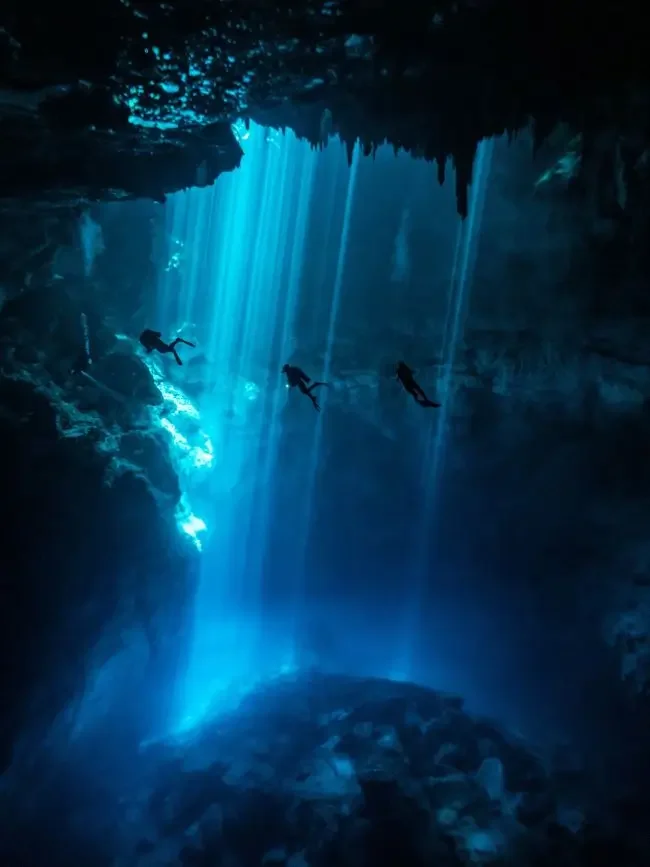
Three divers descend into El Pit. Photo: Luke Coley
4. The "Cathedrals": Cenote El Pit & Dos Ojos
Forget "swimming holes." The deep cenotes of the Yucatán are something closer to cathedrals. Vast underground chambers where the light enters from a single overhead opening and falls in long, laser-precise beams through the water, illuminating particles suspended in the blue.
Dos Ojos ("Two Eyes") is a twin-opening cave system, one of the longest underwater cave networks on the planet, where you can snorkel through chambers of crystal-clear water with stalactites hanging from the ceiling above and below. Cenote El Pit goes deeper, literally, with a 120-metre shaft that, at around 30 metres, passes through a halocline: the invisible boundary where freshwater meets saltwater. Pass your hand through it and watch the water bend like glass.
These aren't places you visit solely for a photo. You visit them for the experience, where you feel genuinely small among something natural, ancient, and unique.
What to wear:
Rash guard and a hat for sun protection. No sunscreens here!
A wetsuit is definitely advisable for El Pit; that saltwater layer is cold
Waterproof camera housing if you want to capture the light beams (try without flash to get the best of the atmosphere)
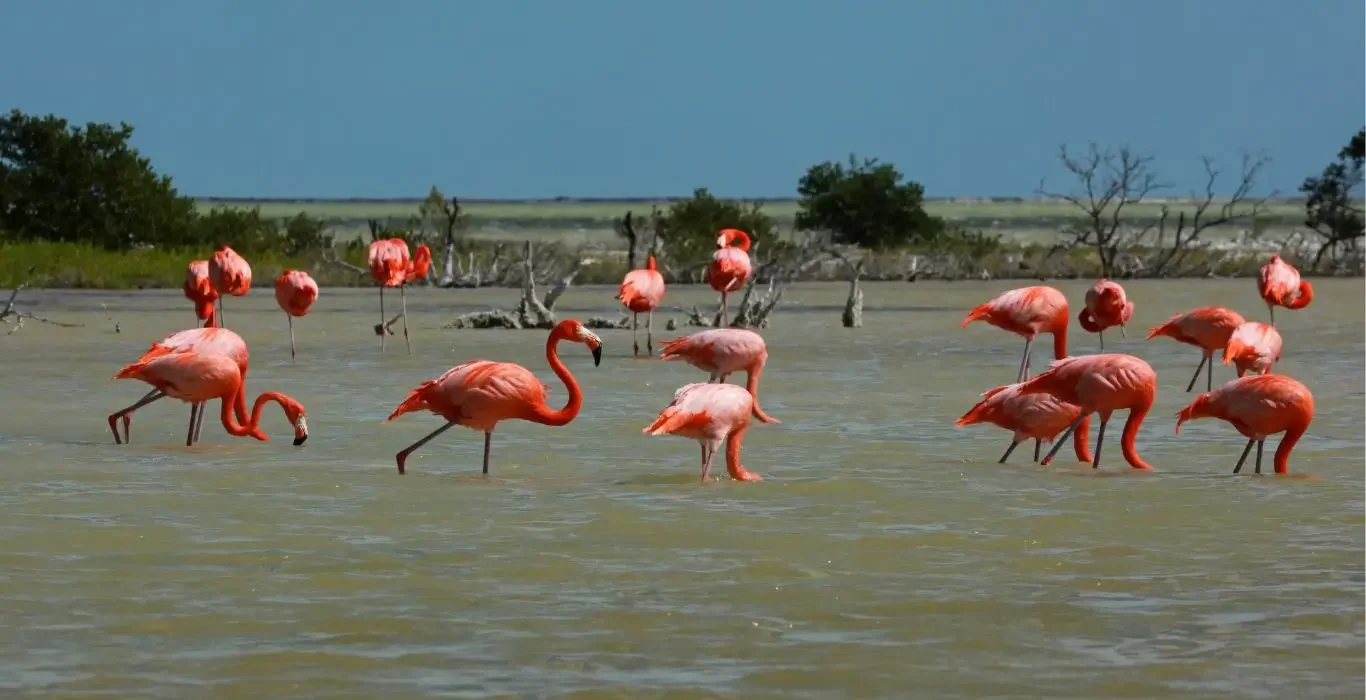
5. Flamingo Skies at Río Lagartos
The pink lakes of nearby Las Coloradas are worth a glance, but they're really just a quick (though not unimpressive) photograph. Río Lagartos is an experience.
The journey begins in a small, flat-bottomed boat, threading through channels of mangrove dense enough that you have to duck to avoid the branches. The air smells of salt and warm mud, and herons watch you pass. Then, around a bend in the estuary, everything turns pink; not the water, not the sky, but thousands of wild Caribbean flamingos wading, feeding, squabbling, and occasionally taking flight in great rose-coloured waves.
It's about the sound as much as the sight: the low, collective murmur of a flamingo colony at work, interrupted by the sudden percussion of hundreds of wings. It's loud and chaotic, but thoroughly transfixing.
Best time to visit: Year-round, though numbers peak in the breeding season (April to August). We time our approach for the low, golden light of morning or late afternoon.
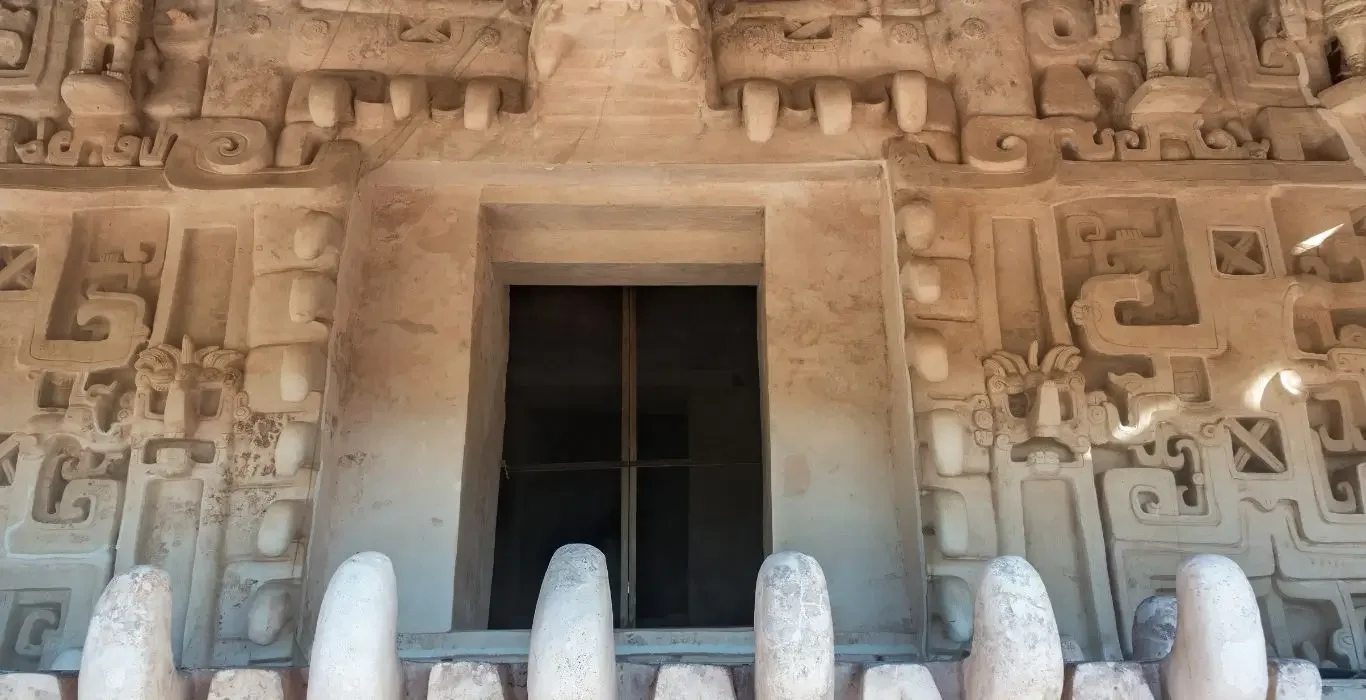
6. Ek Balam: The Black Jaguar's Tomb
If Chichén Itzá is the Yucatán's headline act, Ek Balam, "Black Jaguar" in Yucatec Maya, is the support band that turns out to be better than the headliner. Fewer visitors, fewer barriers, and, crucially, you can still climb it.
The site's great structure, the Acropolis, rises to 32 metres and rewards the climb with views across the jungle canopy. But the real reason to visit is at its summit: the Mouth of the Monster. This elaborate stucco doorway is carved in the form of a gaping deity's face, with jaguar-skin spirals, guardian figures, and an intricacy of detail that looks as if it were carved last week. It's one of the finest examples of Maya stucco work in existence, and at Ek Balam, you can get close enough to see the texture of individual brushstrokes.
Sustainable travel note: Ek Balam receives a fraction of the visitor numbers of major sites, which means it's remained remarkably well-preserved. We keep it that way by visiting in small groups and keeping to marked paths.
7. A Taste of Valladolid (Beyond the Tacos)
Valladolid is the kind of colonial town that earns its reputation as a food city quietly. There are no Michelin stars or influencer queues, just families who've been cooking the same dishes for generations.
Lomitos de Valladolid, slow-braised pork in a rich, spiced sauce, and the town's distinctive longaniza sausage are the things to order. Find them at the market, eat at a plastic table, and don't let the heat put you off the local atole.
And then, as the sun goes down, stay in the town square. Every evening, thousands of birds, mostly starlings and grackles, come in to roost in the trees around the central park. The noise is extraordinary: a chattering, wheeling cloud of wings above the illuminated church facade. It's loud, but genuinely beautiful, and happens pretty much every night. If you have to be back on the coach for 6 pm, you’re missing out.
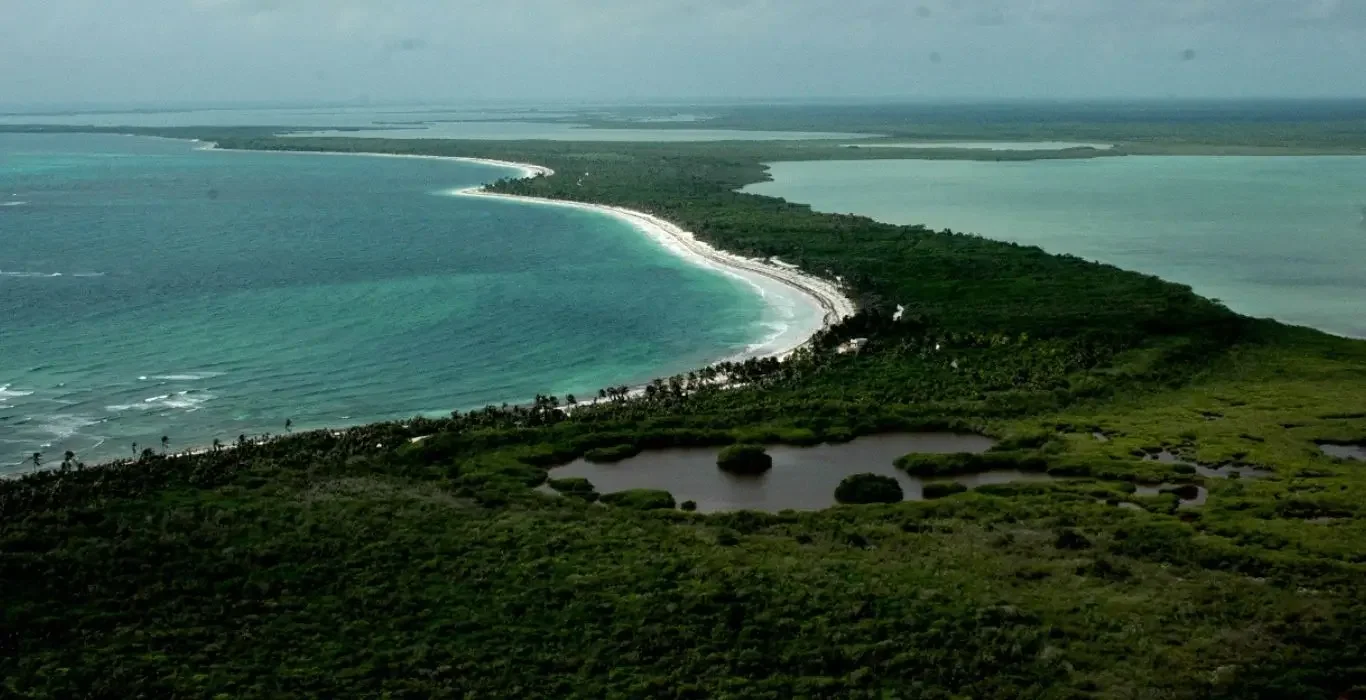
Sian Ka’an Biosphere reserve. Photo: Martha xucunostli, Wiki Commons
8. Sian Ka'an: "Where the Sky is Born"
The name alone is worth the trip. Sian Ka'an ("Where the Sky is Born" in Mayan) is a UNESCO-protected biosphere reserve on the Caribbean coast. It’s half a million hectares of tropical forest, mangrove, and coral reef that feels untouched because, well, it pretty much is.
You can day-trip this, but we recommend it as a part of our 7 and 12-day expeditions. The reward is an experience unlike anything else on the peninsula. Float down the ancient trading canals the Maya built through the mangrove; clear, slow, warm water carrying you gently through corridors of green to the sound of distant birds. Nature designed the world's most perfect lazy river, and then mostly kept it to herself.
What you might see: Manatees, crocodiles, roseate spoonbills, and turtles nesting on the beaches. Or nothing unusual at all; just sky, water, and silence.
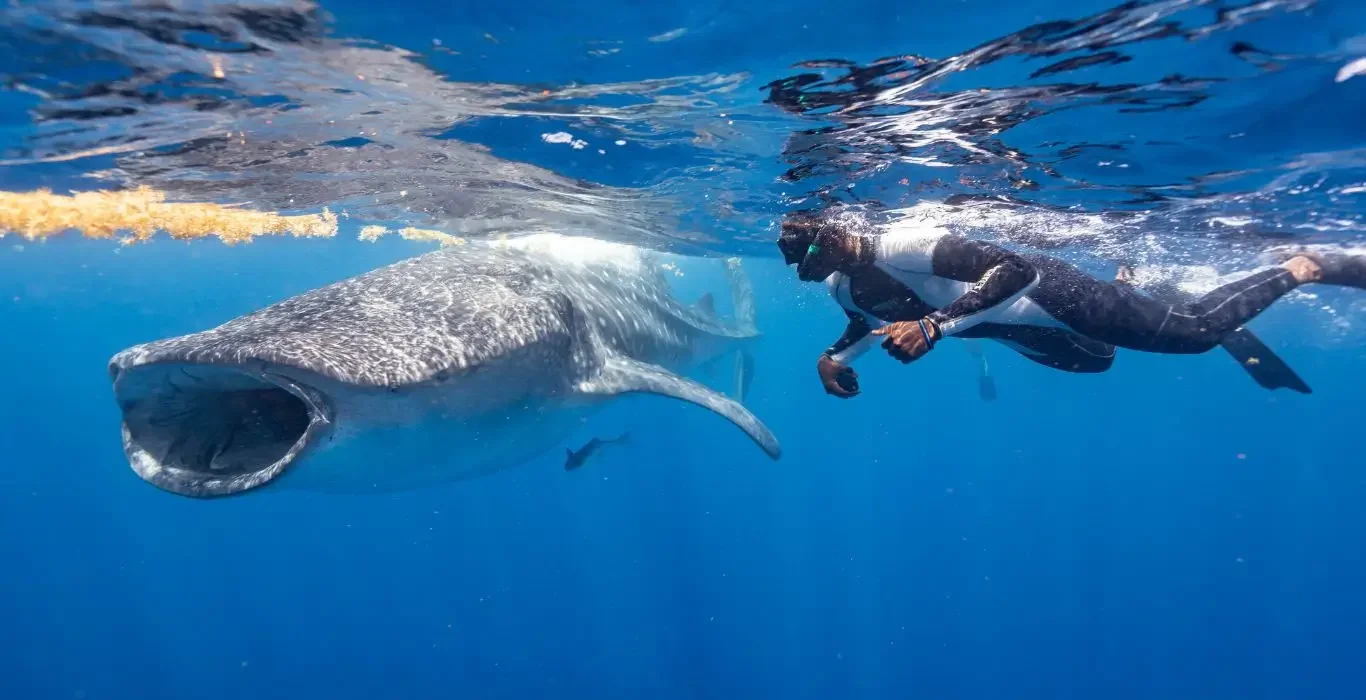
A snorkeller gett ing up close with a whale shark at Isla Mujeres. Photo: Luke Coley
9. The Giants: The Predators and the Plankton Eaters (Seasonal)
This is the point in the guide where we ask you to set aside whatever shark film you've watched and approach the subject with an open mind.
In winter, the nutrient-rich waters off Playa del Carmen attract bull sharks, lots of them, on their annual aggregation. We dive with them. Not in cages, but with them. This is not "Jaws", and we are not trying to sell you an adrenaline hit. It is a masterclass in apex predator behaviour: slow and utterly indifferent to the small mammals in wetsuits who've come to observe them. The experience tends to recalibrate your relationship with the ocean (or even your entire vacation) in a way that's difficult to describe and impossible to forget.
Come summer, the focus shifts from the reef’s powerhouses to the ocean’s gentle architects: Whale Sharks and Manta Rays. Near the islands of Holbox and Isla Mujeres, you’ll find yourself drifting alongside sized giants that are fueled entirely by plankton. It’s a surreal, slow-motion ballet where oceanic mantas glide with an elegance that puts our best swim strokes to shame.
Important note: These experiences are season-dependent and require PADI Open Water certification or above. We dive responsibly; no feeding, no touching, no chasing. These are animals going about their lives.
10. Hormiguero: The Hidden Monster
This one is ours. Part of the 12-day Peninsula Expedition only, Hormiguero is a small, rarely visited archaeological site deep in the Campeche jungle that most Mexico guidebooks don't mention and most tour operators don’t offer.
What awaits is a single but extraordinary structure: a building whose main doorway is carved in the form of an Earth Monster; a vast, fanged face with spiralling eyes and elaborate scrollwork that frames the entrance like the maw of something ancient and patient. The carvings are astonishing, and there's a very good chance that, on the day you visit, you will be the only people there.
This is the very definition of a Pixel Expedition.
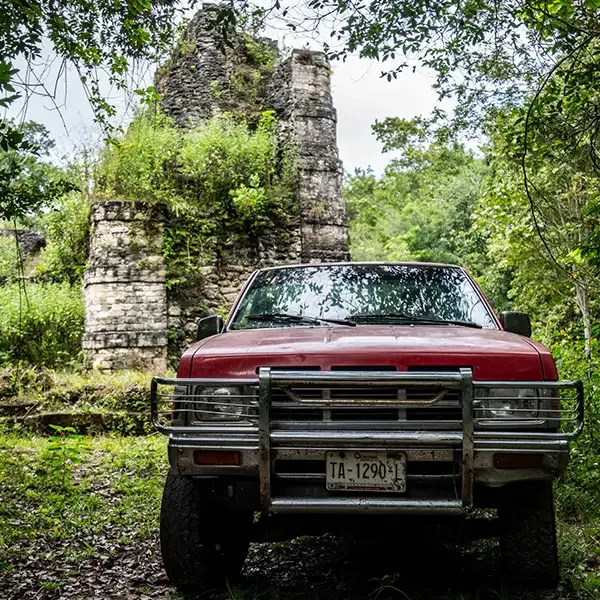
The remote Rio Beck ruins. Photo: Luke Coley
Why Multi-Day Trips? The Honest Answer
The Yucatán is geographically deceptive and, on a map, the peninsula looks compact. In reality, the jungle ruins of the south - Calakmul, Hormiguero, Ek Balam - and the coastal wonders of the north - Bacalar, Río Lagartos, Sian Ka'an - are separated by hundreds of kilometres of biosphere. You can’t do both in a day trip. In fact, you can’t do either one with great depth on a day trip.
Our expeditions are structured around the Yucatán Circle: a logical route that moves between ecosystems, timing arrivals for the right light, the right tide, the right season. We don't do 5 am wake-up calls for no reason (though brace, we might do them). If we're up before dawn, it's because the flamingos are best at sunrise, or because the halocline in Cenote El Pit turns gold at a specific angle in the morning light. Every early start earns its keep.
And you do it in a comfortable, private SUV, stocked with good snacks, cold water, and a guide who can tell you why any specific tree is important, rather than on a large tour bus with 45 other folk.
Shooting the Yucatán: Three Quick Tips
The Yucatán is a challenging but extraordinary photography subject. A few things worth knowing:
Jungle light is brutal. The high tropical sun creates extreme contrast between the bright sky and the shaded ruins below. Shoot ruins in the early morning or late afternoon. Embrace the shadows; they help tell the story of the depth of the stone.
Invest in a CPL filter for cenotes. A circular polarising filter cuts surface reflection on the water and reveals the extraordinary blue-green depths underneath. Without one, cenote photographs tend to look flat. With one, they look like another planet.
Leave the tripod on when it matters. For low-light cave cenotes and dawn flamingo shoots, stability is everything. A travel tripod is worth every gram of its weight in your pack.
It’¡s also worth noting that we operate a strict no-touch, no-chase, no-flash policy with all wildlife. We stay on marked paths at all archaeological sites and adhere to leave-no-trace principles throughout. These places are not backdrops, put here for tourist convenience, they are ecosystems and living cultures. We visit as respectful guests, because that's the only version of this that works long-term.
The Yucatán Is a Puzzle
You don't "do" the Yucatán, you piece it together, slowly, over several days. The jungle and the coast, the ancient and the still-living, the overwhelming and the intimate. Each experience adds context to the others. By the end of a proper expedition, the peninsula should start to make sense as a whole: a place of extraordinary depth and variety that rewards the traveller willing to stay long enough to see it.
Don't just visit the Yucatán… come and understand it.
