

Magdalena Bay 2025: Inside an Unforgettable Mexican Sardine Run Season
Anyone who has experienced a big, but unpredictable, natural event will know that there is a specific kind of silence that happens right before everything turns to chaos. In Magdalena Bay, you’re bobbing in a panga off the shore of Baja California Sur, watching the horizon. Then, you see it: a single frigate bird drops like a stone, followed by the erratic splash of a sea lion. And here we go…
Here at Pixel Expeditions, Magdalena Bay isn’t just a pin on a map or a line item on a seasonal calendar. It is one of the most dynamic, fickle, and rewarding marine ecosystems on the planet. We’ve done our share of navigating these waters, yet every time we head out into the "Mag Bay" blue for the Mexican sardine run, there’s a hum of genuine uncertainty. Nature doesn’t work on a fully predictable schedule, and that is exactly why we find it so compelling.
Our 2025 season was a reminder of why we do this. It wasn’t about ticking boxes or chasing a marketing brochure version of the ocean. It was about the slow mornings, the sudden adrenaline of a baitball, and the realisation (again!) that we are guests in a very large, very wild home.
What Makes the Magdalena Bay Sardine Run Unique?
When people hear "Sardine Run," their minds often jump to the cinematic, cold-water chaos of South Africa. But the Mexican sardine run is a different beast entirely. While it shares the same raw energy, the geography of Magdalena Bay offers something more intimate.
The bay is protected by 2 barrier islands, creating a unique transition zone between the deep Pacific and the shallow, nutrient-rich mangroves. Getting into the boats at the beginning of the day in Mag Bay is a generally calm experience. This accessibility doesn't just make it easier for us to get to the action; it creates a transition from calm, gentle early mornings to explosive action-filled days.
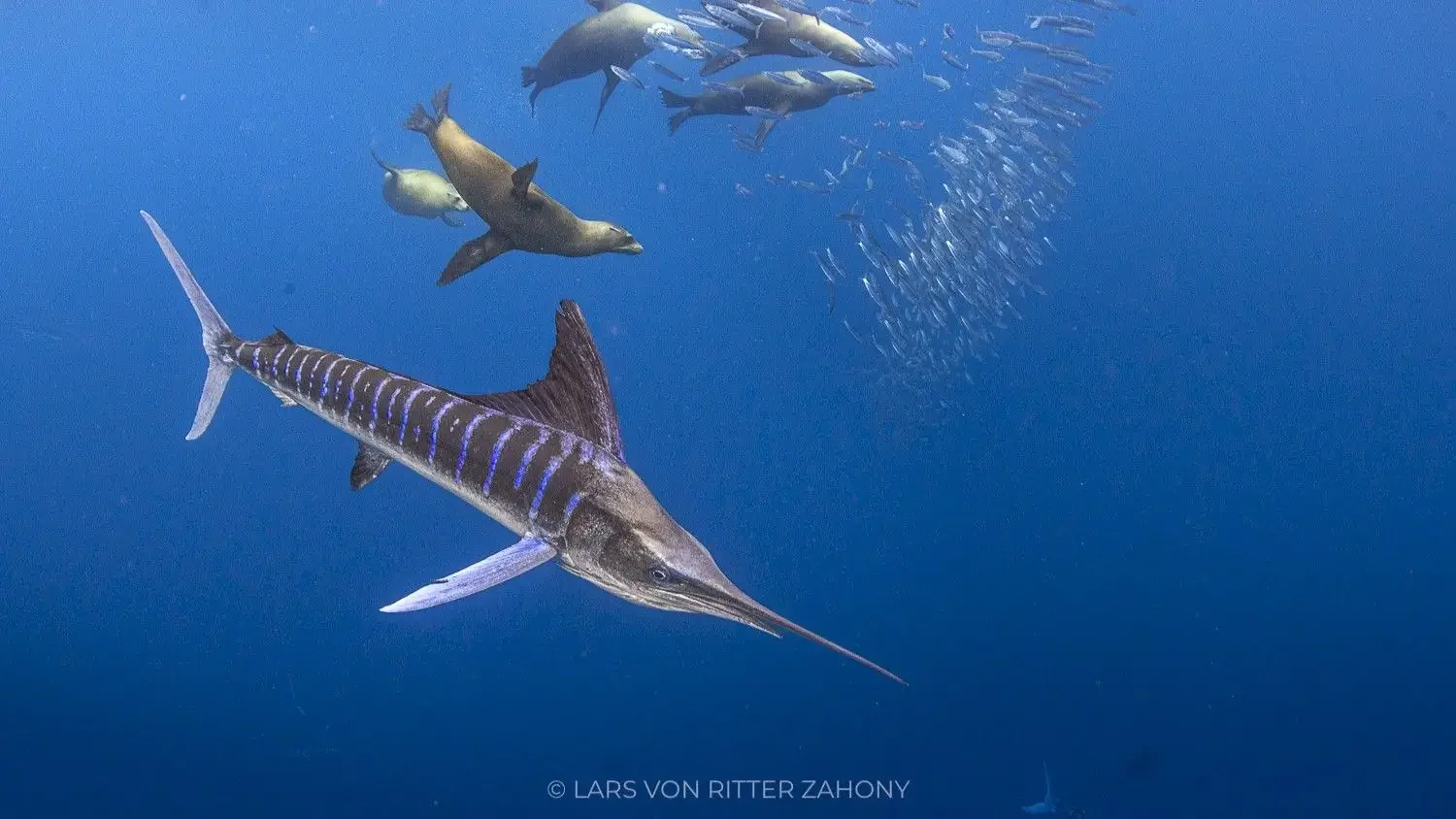
In these waters, the stars of the show are the striped marlin. While you’ll find Striped marlin elsewhere, the density of them here, attracted by the massive baitballs of sardines and mackerel, is world-class. It’s a multi-layered event where sea lions, Bryde’s whales, and hundreds of birds join the fray, creating a 360-degree theatre of natural behaviour.
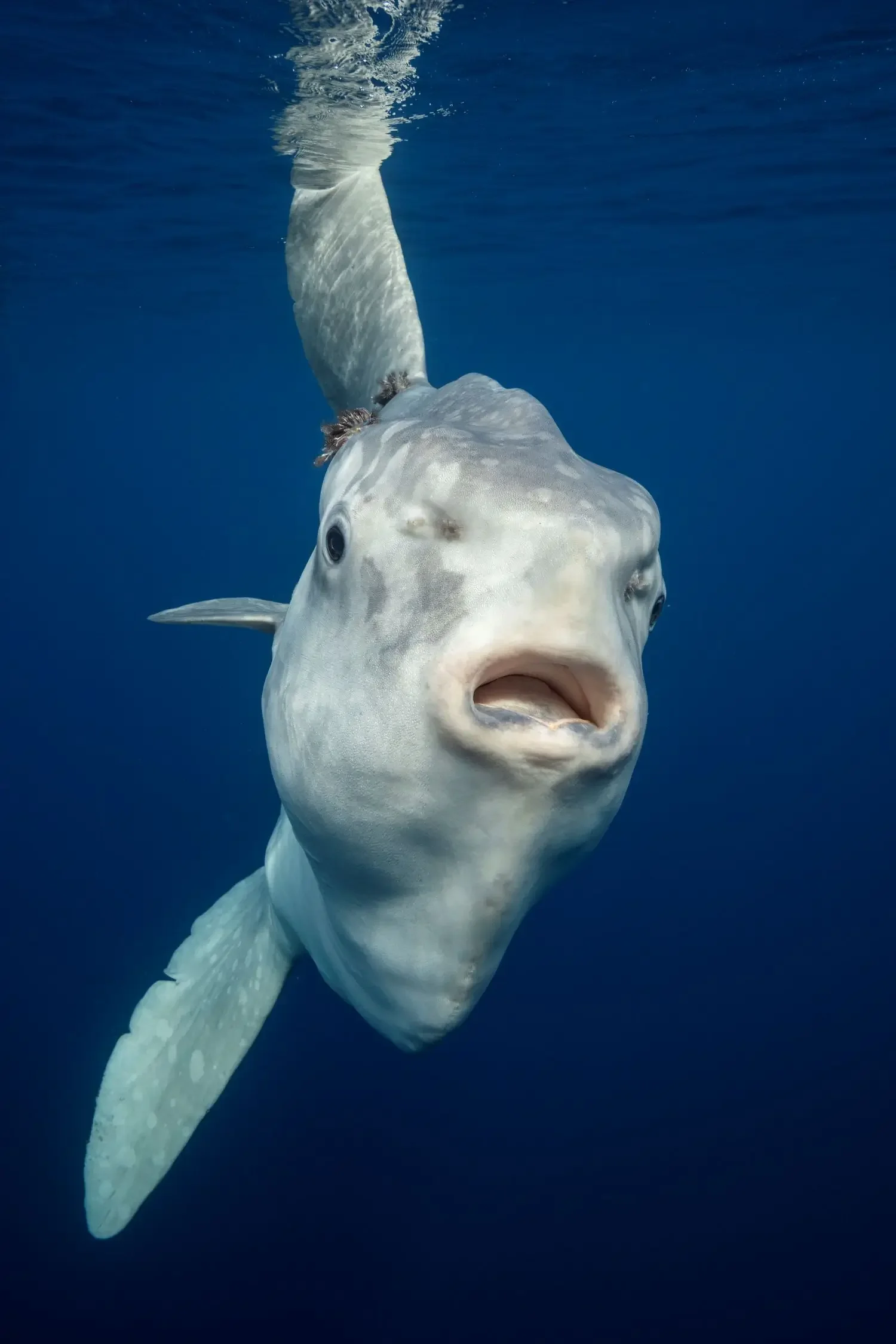
A Mola Mola close to the surface. Photo: Luke Coley
The 2025 Season: The Big Picture
If we had to summarise the 2025 season in one word, it would be patience.
The ocean this year felt alive, but as always, it required a bit of detective work. Water clarity shifted with the currents, and the bait moved in patterns that challenged even our most experienced local captains. However, this is where the package tour mindset fails, and the expedition mindset wins. By staying flexible and staying out longer, we found moments of clarity that were frankly breathtaking.
We had days where the ocean was like a lake, with visibility stretching deep into the water column, allowing us to see the shimmer of sardines from the boat. Our morning rides across the bay to the open ocean were more atmospheric, with often misty mornings providing the perfect background to imagine what was waiting for us out on the ocean. The animal diversity this season was particularly high, proving that the ecosystem remains resilient and vibrant.
Marine Life Highlights: The Stories Under the Surface
Striped Marlin on Static Baitballs
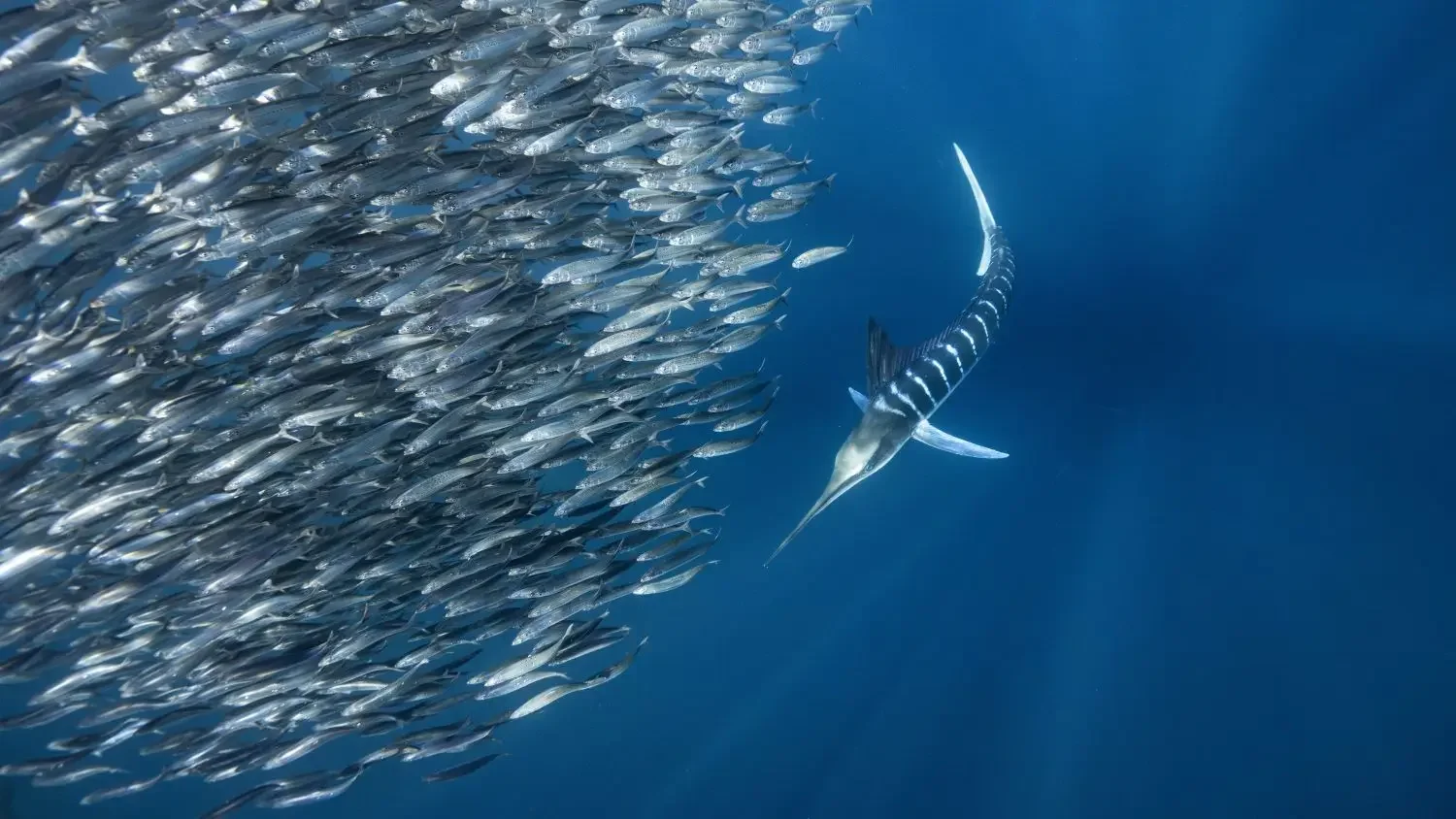
The ultimate goal for any photographer or wildlife enthusiast in Mag Bay is the "static" baitball. Most baitballs are on the move, a high-speed chase through the blue. But occasionally, the predators manage to corral the sardines into a tight, shimmering sphere that stays in one place.
This season, we were fortunate enough to spend extended periods with striped marlin on static balls. Watching them work is a masterclass in strategy. They don’t just mindlessly charge; they use their bills to stun and slice, their lateral stripes flashing electric blue as they communicate and coordinate. Being in the water for these long, relaxed encounters allows you to stop worrying about your camera settings and just watch. You begin to see the individual personalities of the fish; some bold, some calculating.
Bryde’s Whales: The Size and the Power
There is no way to prepare for the experience of seeing a Bryde’s whale lunging through a baitball. The captains alert us that the whales are coming into the baitballs, generally before anyone else onboard even sees the animal. These whales are the heavy hitters of the sardine run in Mexico. They track the marlin’s work from below, then rise with mouths agape, engulfing half a baitball in a single pass. This year, the Brydes were frequent visitors, often appearing out of nowhere to remind us just how small we really are.
The Unexpected Breach
While we go for the marlin, mag bay always has a "plus one." This season, Humpback whales decided to make their presence known. Seeing a 40-ton animal breach against the backdrop of the rugged Baja coastline is a stark contrast to the intricate, fast-paced action of the fish. It’s a reminder that Mag Bay is a corridor for giants. No matter how many times you see it, your jaw still drops.
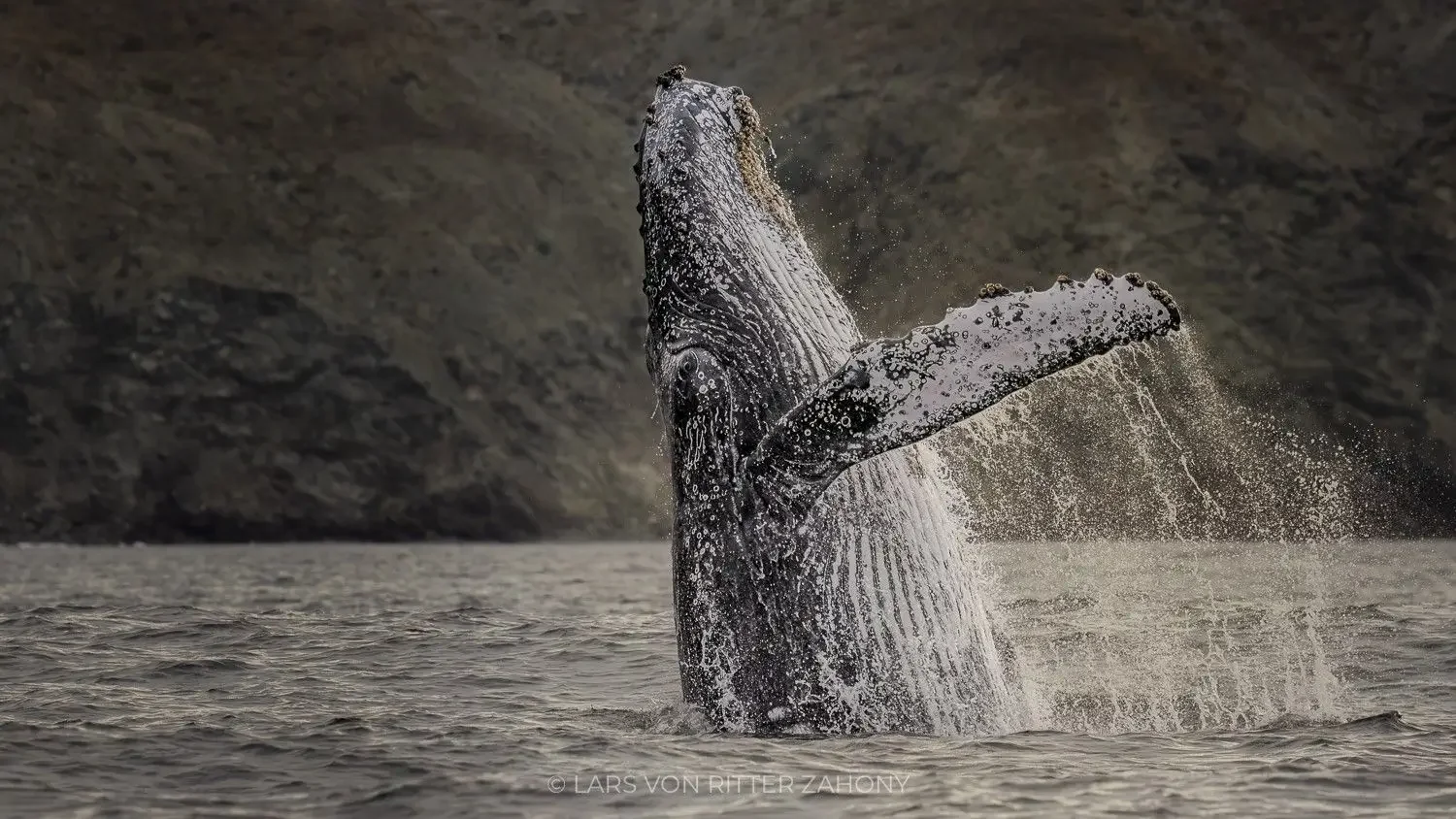
A humpback whale breaching during the sardine run. Photo: Lars Von Ritter Zahony
Surreal Encounters: Mola Mola
We had several encounters with a Mola mola (Sunfish) drifting near the surface. These prehistoric-looking creatures are often shy, but a few were curious enough to linger. Seeing a Mola mola in the open ocean feels like a glitch in the matrix. They are awkward, oddly beautiful, and utterly surreal.
The "Wow" Factor: Mobula and Cow Nose Rays
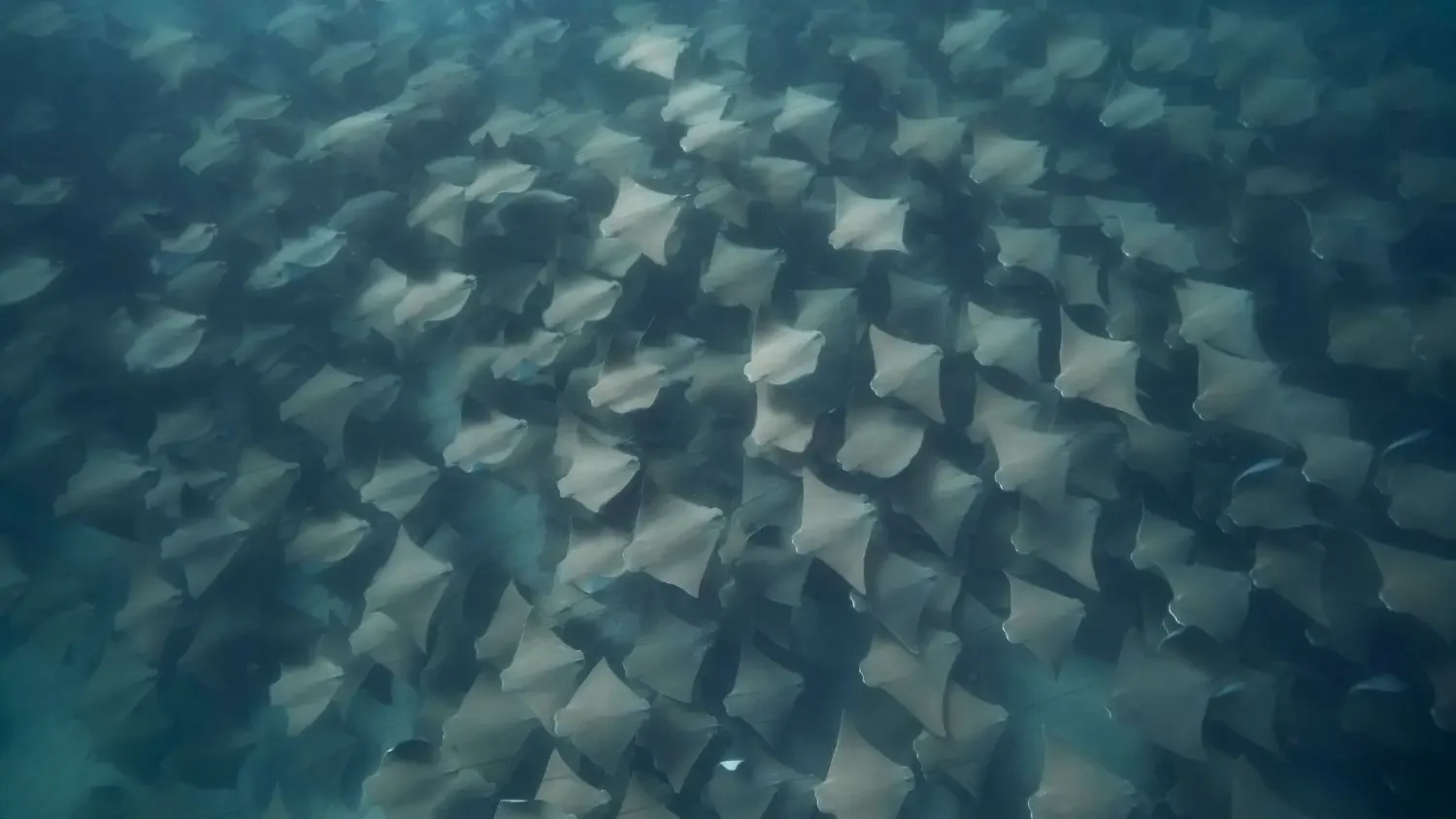
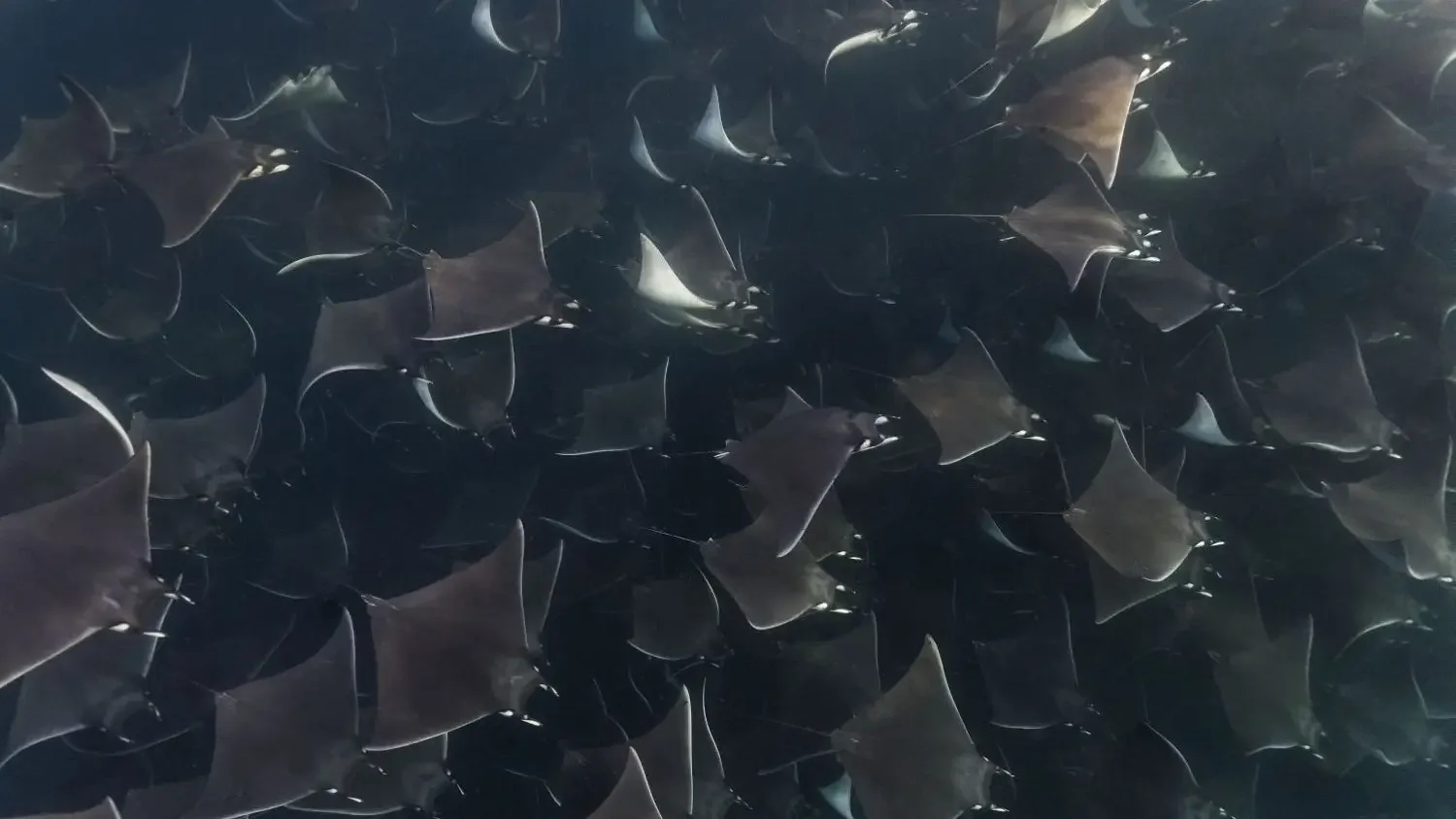
The rays are the choreographed dancers of the experience. This year, we encountered schools of Mobula and Cow Nose rays so large they seemed to blot out the sandy bottom of the bay. Moving as a single, undulating organism, thousands of rays passed beneath our pangas. It’s a sight that silences even the most talkative groups.
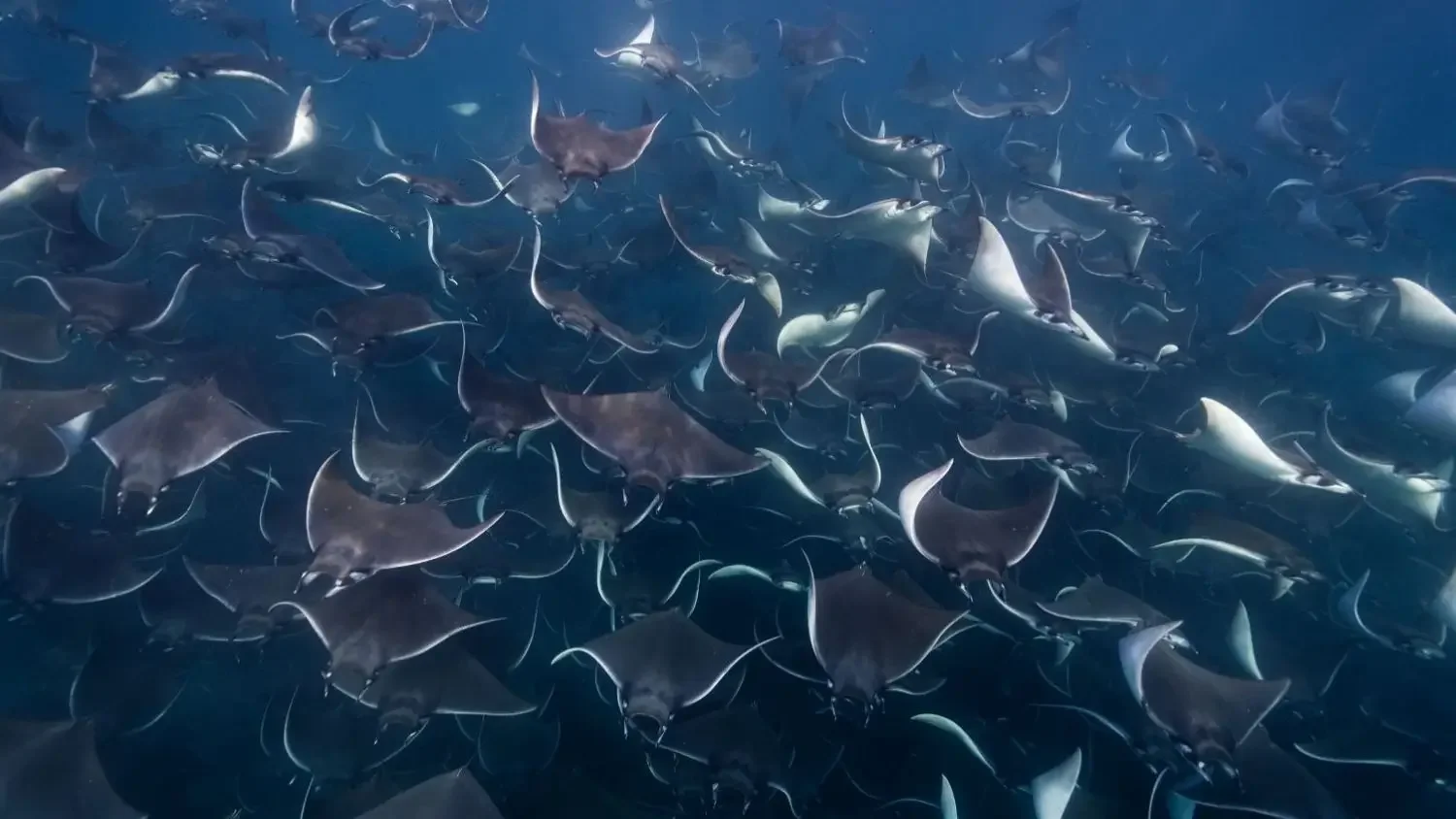
A huge school of mobula rays close to the surface. Photo: Yulia Mare
The Eyes in the Sky: The Brandt’s Cormorant
We’ve learned never to ignore birds; in fact, this is where I really started working with birds and following their behaviour. As a general rule of thumb, we use frigates, pelicans, and gulls as scouts; there’s nobody better at finding sardines. But one moment in particular stood out, when a single bird, a Brandt’s cormorant, decided to break with norms and really get into a bait ball. Watching it dive in the craziness of marlins and tunas, to pick off sardines, is a reminder that the Mexican sardine run is a three-dimensional and ever-changing event. The air is as much a part of the story as the water.
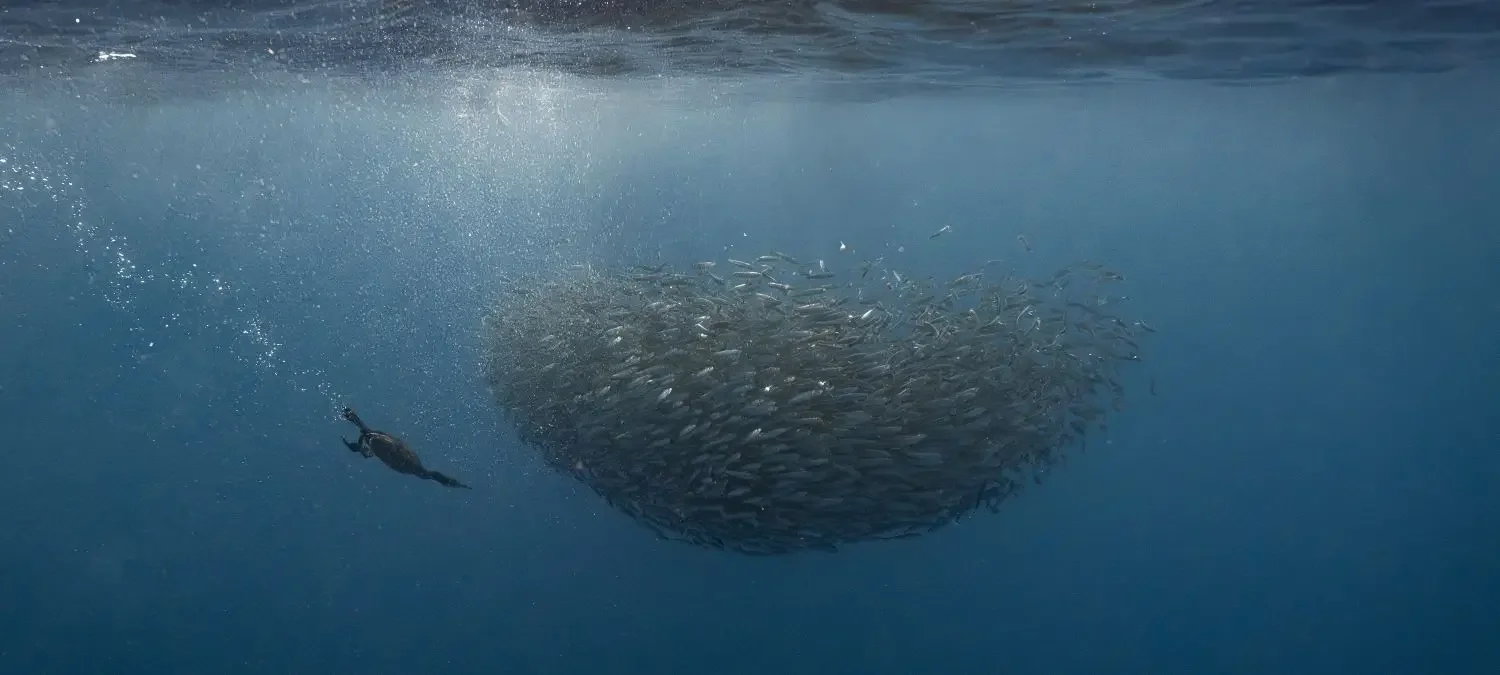
Brandt’s comorant diving on a sardine baitball on this year’s Magdalena Bay expedition. Photo: Yulia Mare
Wild Baja: Moments Beyond the Water
The Pixel Experience isn't just about what happens when you’re wearing a mask and fins. Some of the most enduring memories from 2025 happened on the fringes of the day.
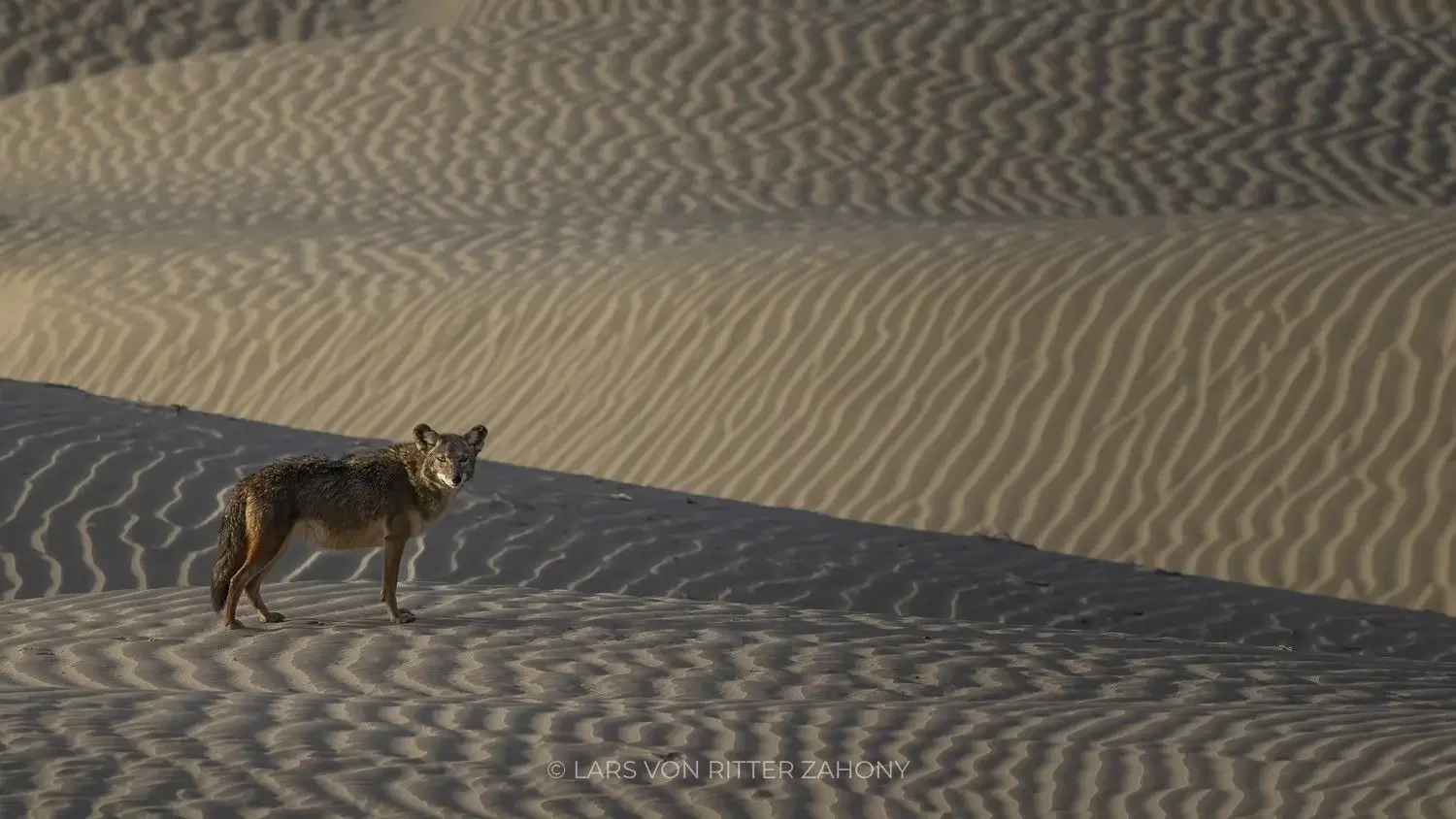
We spent time on remote stretches of beach where coyotes prowled the dunes at dawn, looking for a scavenged meal.
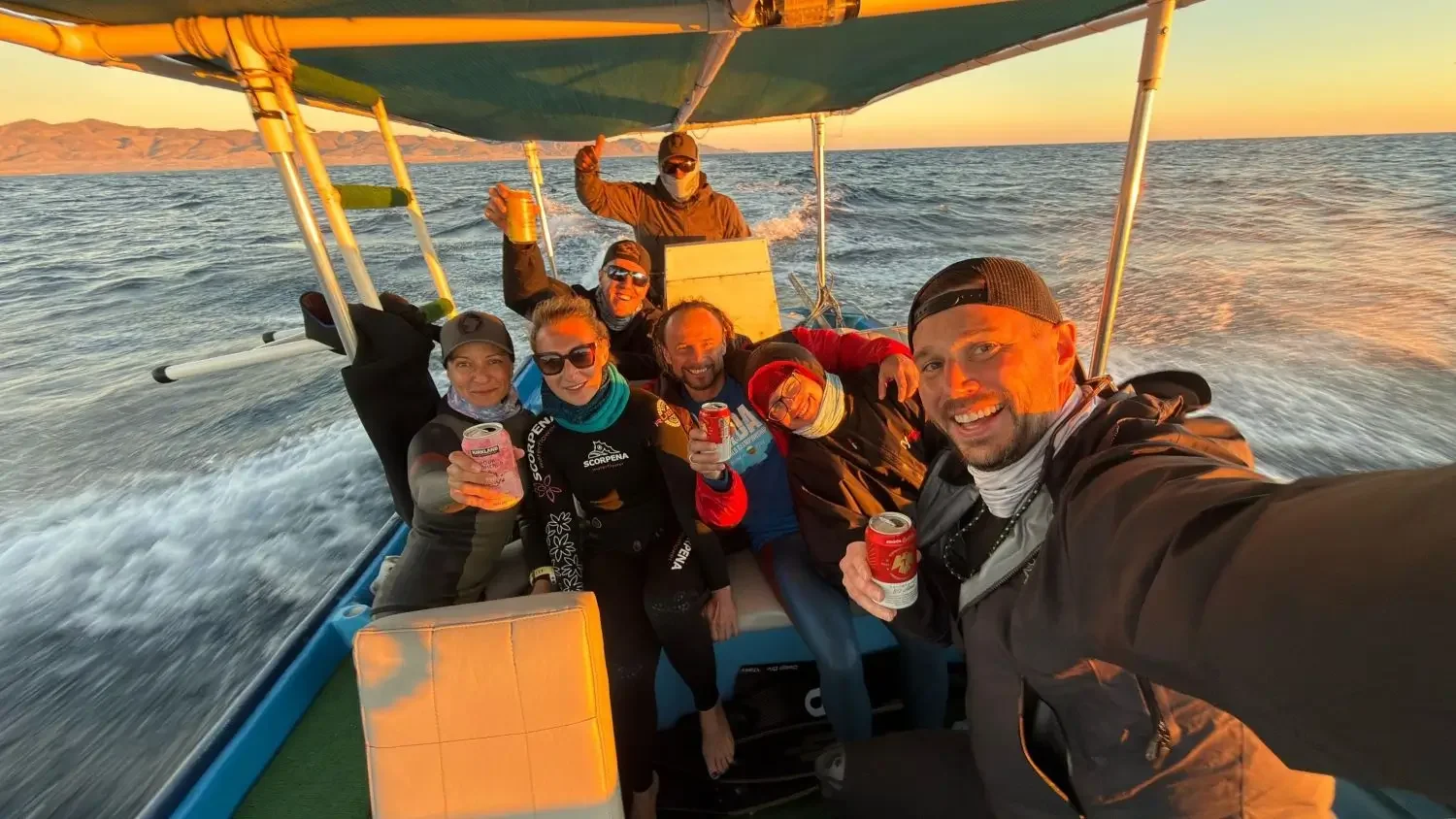
One of the highlights of the season was the commute back to shore After a long day on the water, returning under a canopy of stars while the distant lights of shrimp boats glowed on the horizon felt like travelling through time. There are no crowds here. No neon signs. Just the vastness of Baja.
Sustainability: More Than a Buzzword
We are acutely aware that Magdalena Bay is a fragile place. Our approach has always been low-impact. This means small groups, working exclusively with local captains who know these waters better than anyone, and prioritising the animal's behaviour over getting the shot.
If a baitball looks like it may go down or the predators are moving away, we back off. We aren't here to dictate the terms of the encounter; we are here to witness what the bay chooses to show us. By partnering with local communities, we ensure that the economic benefits of tourism provide an alternative to overfishing, helping to keep the sardine run healthy for decades to come.
Is Magdalena Bay For You?
We’ll be the first to tell you: this trip isn’t for everyone.
If you are looking for a luxury tour where everything on a list is guaranteed, and the towels are folded into swans, you might find Mag Bay frustrating. The days are long, the sun is hot, and sometimes the wind wins.
However, if you are a traveller who finds beauty in the unpredictable, if you’re someone who values a genuine connection with wildlife and doesn't mind a bit of salt in your hair, then there is nowhere else on Earth like this. It’s for the curious, the flexible, and those who understand that the best things in nature aren't found on a schedule.
Final Thoughts: Why We Keep Coming Back
Every year, someone asks us, "Don't you get bored with seeing the same thing?"
The truth is, we’ve never seen the same thing twice. The light is different, the currents change, and the behaviour of a striped marlin on a baitball is as unique as a fingerprint. After the 2025 season, we’re left with a profound sense of gratitude. Gratitude for the local friends who share their knowledge with us, and for the bay itself, which remains one of the last truly wild corners of the world.
Magdalena Bay doesn't need to try to impress you. It just exists in all its raw, chaotic glory. We’re just lucky enough to be there to see it.
Frequently Asked Questions
What is the daily routine like on the water?
We typically head out at sunrise to catch the calmest winds and the most active wildlife. Days are spent on a panga (a local skiff) for 10 to 12 hours, scanning the horizon for bird activity and baitballs. It is a true "safari" experience; some hours are quiet and spent searching, while others are high-intensity bursts of action. We provide lunch and snacks on the boat, and we normally return to port in the late afternoon just in time for a warm meal and sunset.
How physically demanding is the expedition?
While you don’t need to be an elite athlete, a reasonable level of fitness and mobility is required. You will be getting in and out of the panga via a side ladder multiple times a day. The "action" can be fast-paced; when we find a baitball, you’ll need to be ready to slide into the water quickly. Additionally, the open ocean can be "lumpy" with swells, so having decent boat legs and comfort swimming in open water is important.
What specific gear should I pack for a Magdalena Bay expedition?
A 5mm full wetsuit is the "sweet spot" for most guests. Even though the water is relatively warm (mid-70’s°F), you are in and out of the water all day, and the wind chill on the boat can be significant. We also highly recommend a hooded vest for extra warmth, long-blade freediving fins for efficiency, and a high-quality, low-volume mask. Topside, bring a windproof/waterproof jacket for the boat rides and plenty of reef-safe sunscreen.
Where do I fly into, and how do I get to Magdalena Bay?
Most travellers fly into San José del Cabo (SJD) or La Paz (LAP). From there, it is a scenic 3-to-5-hour drive across the Baja peninsula to the town of Puerto San Carlos. We typically arrange private shuttles for our groups to make the transition as smooth as possible. We recommend arriving in Baja at least one day before the expedition starts to account for any travel delays.
Do I need specific insurance for this trip?
Yes. Because we are operating in the open ocean and often far from major medical centres, we require all guests to have emergency medical evacuation insurance (such as DAN or Global Rescue). We also strongly recommend comprehensive travel insurance that covers trip interruption, just in case the weather prevents us from heading out to sea for a day.
