

Magdalena Bound: Why the Mexican Sardine Run Belongs on Every Explorer’s List
The annual migration of Pacific sardines and mackerel off the coast of Baja California Sur, attracts an incredible density of apex predators. It's Mexico's answer to the more famous South African Sardine Run. Never heard of it? You’re not alone. Read on to find out why you need to add the Mexican Sardine Run to your bucket list.
A Short Fin-troduction
What is it? It’s exactly what it sounds like: Pacific sardines make an annual migration, driven by naturally occurring, cyclic changes in ocean currents. They are in huge schools, and where you have huge schools of sardines… You have predators looking for a meal.
Where is the action? Primarily off the wild Pacific coast near Magdalena Bay (Bahía Magdalena) in Baja California Sur, Mexico.
The Main Stars: Striped Marlin are the highlight, showcasing incredible coordinated hunting tactics. Also: sea lions, dolphins, various whales (humpback, Bryde's), and an aerial assault of seabirds.
Best Time to Go: The peak season for the predator spectacle is typically late October to early December.
The Experience: Most Baja Expeditions are shore-based, utilising fast, small boats (Pangas) out of coastal towns like Puerto San Carlos. This allows for quick deployment into the action and provides a more intimate, less crowded, snorkelling-focused encounter.
Baja's Secret: Welcome to Magdalena Bay
The Baja California Peninsula is a land of extremes. From the sun-baked desert spine of the Sierra de la Laguna mountains to the turquoise, protected waters of the Sea of Cortez, the landscape is a constant reminder of nature's raw power and immense beauty. Yet, on its wild, western Pacific edge lies a secret that even many seasoned ocean explorers miss: the Mexican Sardine Run at Magdalena Bay.
For years, the gold standard of pelagic feeding frenzies has been the colossal, chaotic spectacle of the South African Sardine Run. It is, undeniably, a bucket-list event. However, it often comes with logistical challenges, famously cold water, and conditions that can be, shall we say, erm, challenging.
Enter Magdalena Bay. This expansive, sheltered estuary system, already famous for the gentle winter aggregations of gray whales, transforms in the late autumn into a stage for a different, and arguably more intimate and exhilarating, drama. Forget the deep-sea chaos of its South African counterpart; the Mexican Sardine Run offers an accessible, visually stunning, and highly concentrated wildlife encounter, making it a must-add for any serious explorer’s itinerary, particularly those seeking a high-quality, high-action experience with the world’s fastest billfish.
The Grand Migration: What Exactly is the Mexican Sardine Run?
While the term "Sardine Run" suggests a single, monolithic event, what occurs off Magdalena Bay is a seasonal aggregation and migration of vast schools of Pacific sardines and mackerel. This migration is triggered by the natural seasonal shift in ocean currents and upwelling that brings nutrient-rich, cold water close to the surface of the Baja coast, fueling an explosion of plankton.
The small baitfish, the sardines and mackerel, gorge themselves on this aquatic buffet. When billions of these shimmering, are corralled by predators, they create what are known as "bait balls." And where there is a massive food source, the top predators follow. It’s a classic, relentless ocean drama where the roles of hunter and hunted are played out in crystal-clear, relatively warm waters, providing what we at Pixel Expeditions call the ultimate front-row seat.
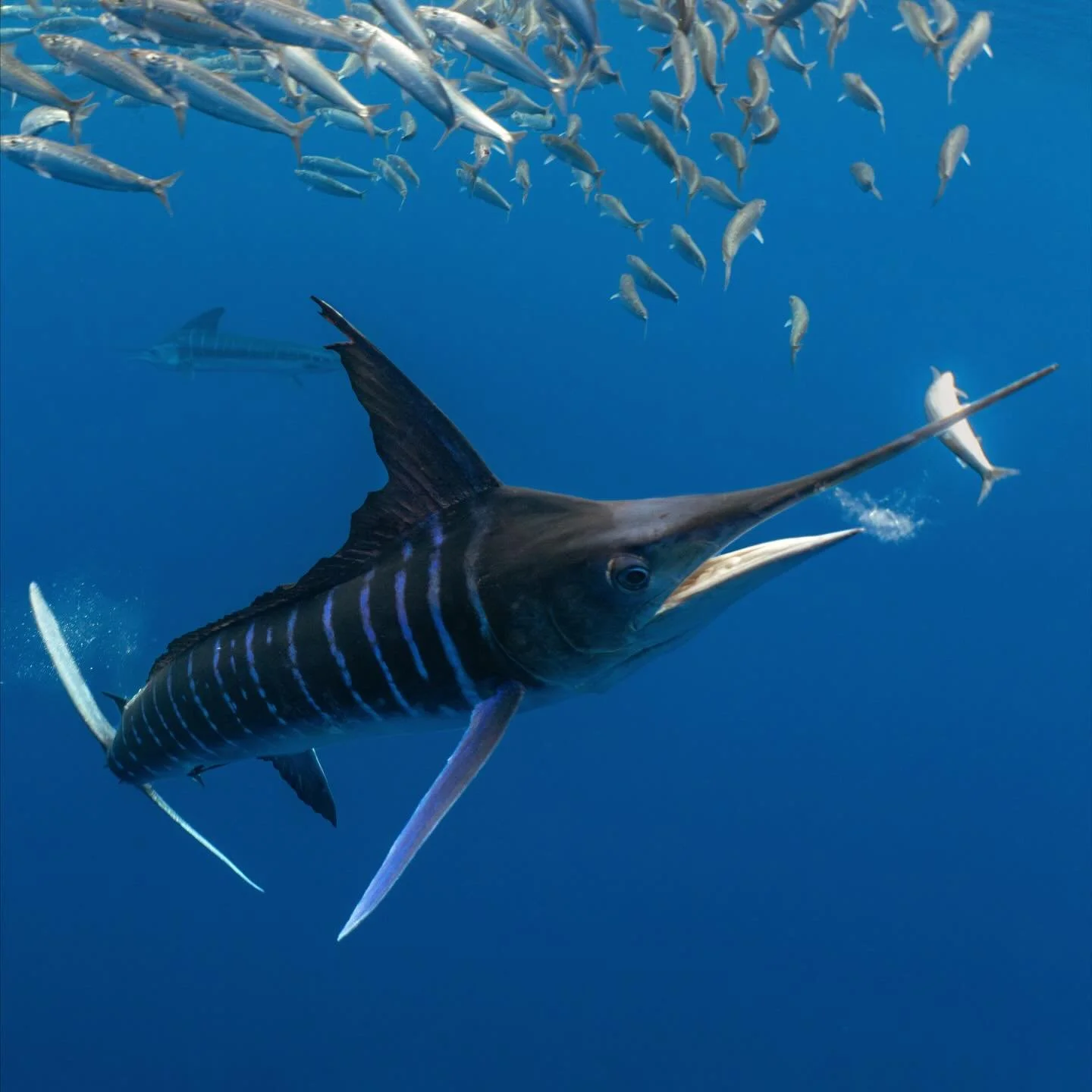
Blue striped marlin at Magdalena Bay. Photo credit to @jferraragallery
The Apex Predators: Who's Dining at Mag Bay?
The undisputed star of the Mexican Sardine Run is the magnificent striped marlin (Kajikia audax). Don’t be fooled by their appearance. These magnificent fish are not just casual diners; they are highly evolved, very coordinated assassins.
The Strategy: Striped marlin don't just charge in; they work together in small, synchronised packs. They use their tremendous speed (after all, they are one of the fastest fish in the ocean) and their signature long, pointed bills not to spear, but to slash and stun their prey. They circle the baitfish, forcing them into an ever-tightening sphere… the perfect bait ball.
The Show: When hunting, the marlin’s namesake stripes light up in vivid shades of electric blue and lavender thanks to special pigmentation cells (chromatophores). Watching a 6.5-foot (2 metre) predator, lit up like a neon sign, streak through a bait ball is a moment that redefines adrenaline. The action often takes place very close to the surface, making this a prime target for snorkelers and freedivers; no heavy scuba gear required!
The Comic Relief: California Sea Lions
No Baja wildlife experience is complete without the charming chaos of the California sea lion (Zalophus californianus). Where the marlin are strategic and elegant, the sea lions are pure, unadulterated opportunists.
Sea lions dive-bomb into the bait balls with a mixture of acrobatic agility and greedy abandon. They twist, they turn, they dart. It's less a hunt and more a playful rampage. They’ll often harass the marlin, trying to steal a stunned sardine, adding a touch of humorous, frantic energy to the spectacle. Their sleek, torpedo-like bodies are a marvel to watch as they spiral through the action.
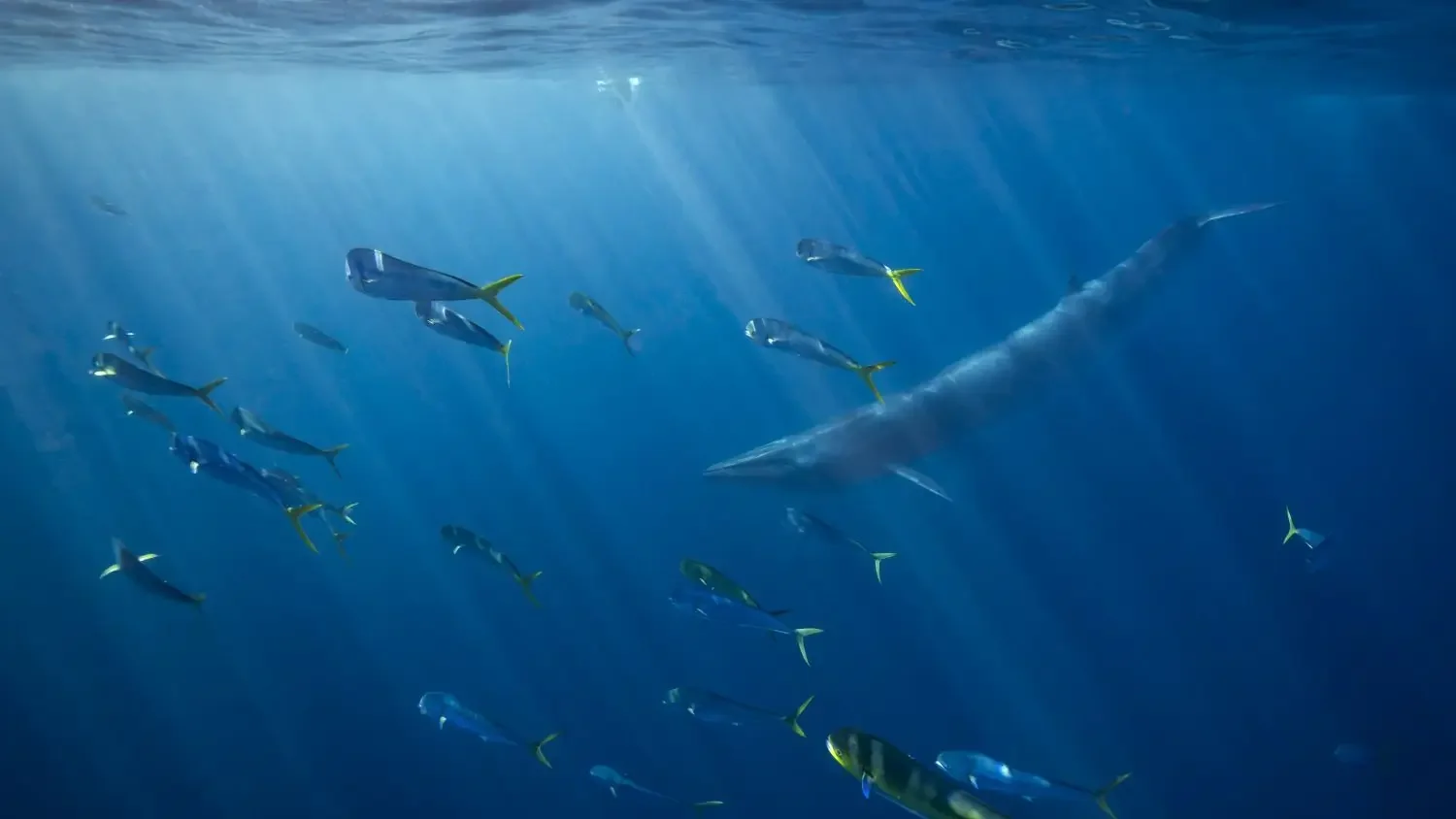
A Bryde's whale and mahi mahi close to the surface. Photo: Luke Coley
The Giants: Whales and Dolphins
The presence of true marine megafauna underscores the size of this feeding event.
Whales: While the gray whales arrive later, the sardine run is often frequented by Bryde's and humpback whales. Bryde's whales are particularly relevant because they engage in 'lunge feeding,' exploding from below into the dense schools of baitfish, often startling the less colossal predators, as well as the observers!
Dolphins: Common dolphins and bottlenose dolphins are frequently sighted and, like the marlin, they are expert herders. Their coordinated attacks from below help compress the sardines, driving them closer to the surface where the marlin and birds can attack. Seeing a 'super-pod' of common dolphins is a powerful reminder of the ocean's scale.
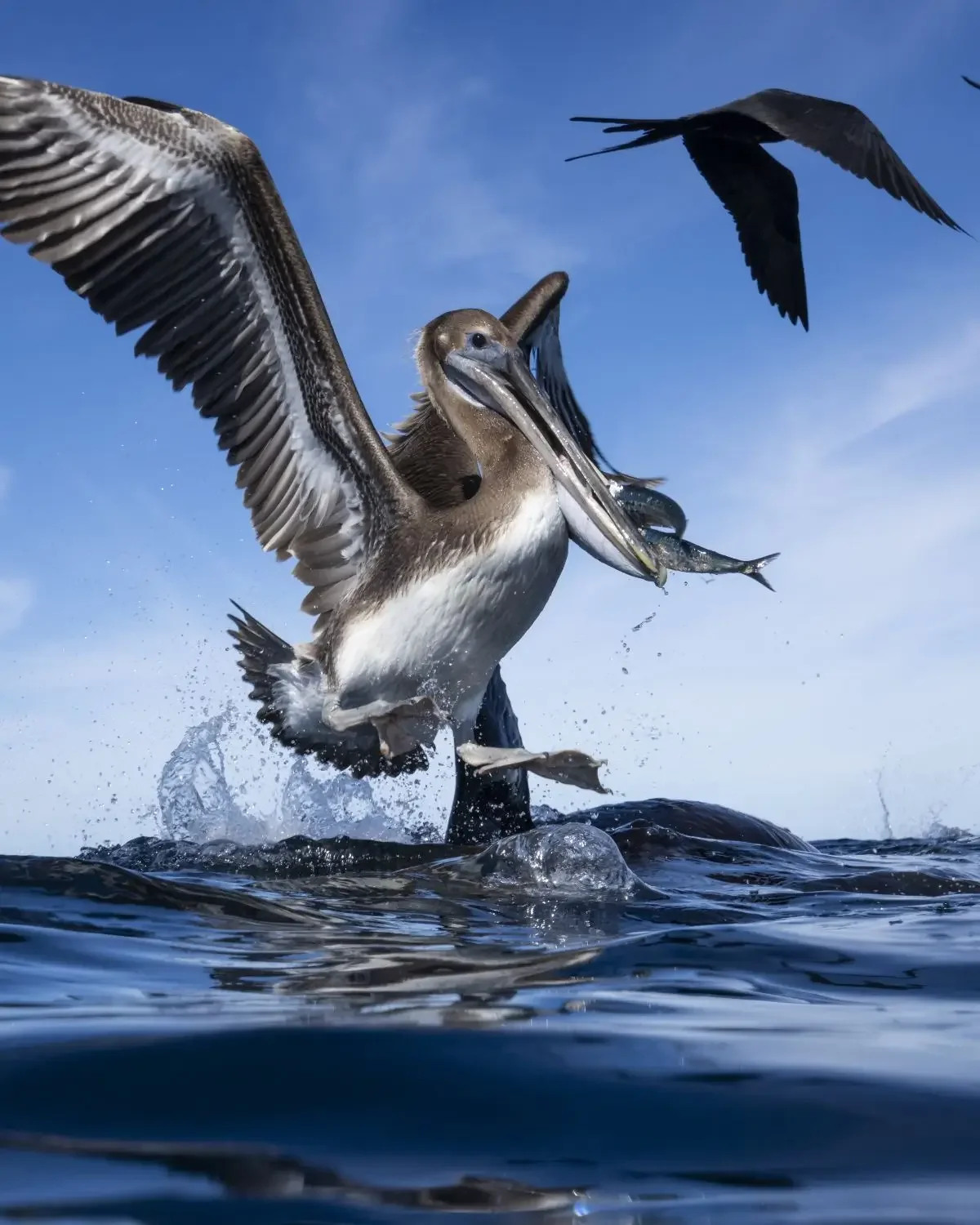
A brown pelican scoops up sardines as a frigate bird flies by during the Mexican Sardine Run. Photo: Luke Coley
The Sky Patrol: Essential Spotters and Aerial Assassins
For the experienced explorer, the action in the sky is just as vital as the action beneath the waves. The air force above the Mexican Sardine Run is not just there for a free lunch; they are essential collaborators in the hunt and, crucially, they are the first sign for our expedition captains that a bait ball has formed.
The Sentinel Species: The presence of seabirds circling, diving, and plunging into a specific patch of ocean is the tell-tale sign that the marlin and dolphins have successfully compressed the bait. This makes them our most reliable spotters, saving precious time on the water.
Master Divers: The star aerialists are the brown pelicans and the various species of gull. Pelicans execute dramatic, clumsy-looking, yet effective, body-slam dives into the surface, scooping up mouthfuls of stunned fish. Gulls, however, are a little more precise in their attacks, striking the water like feathered missiles.
The Aerial Pirates: Look out for the magnificent Frigatebirds with their distinctive hooked wings. They often engage in kleptoparasitism, harassing other birds, particularly the gulls, until they drop their catch mid-air. This constant aerial drama adds a beautiful, complex layer to the feeding frenzy.
For those interested in birding or capturing fast-action wildlife photography above the waves, the density of species here, including terns, gulls, and cormorants, during the run is a spectacle unto itself. It transforms the ocean surface into a true multi-element wildlife safari, making the Magdalena Bay expedition a must-do for both marine enthusiasts and dedicated birders.
Expedition Logistics: Your Shore-Based Baja Adventure
One of the logistical strengths of the Magdalena Bay experience, particularly compared to its South African counterpart, is its accessibility and the style of expedition. Most operators running Baja Expeditions here opt for a shore-based model, rather than liveaboards.
Home Base: Puerto San Carlos and Beyond
The typical operation is based out of a small, authentic fishing town on the bay, such as Puerto San Carlos or even accommodations on the remote Magdalena Island itself. This allows explorers to stay in local hotels or dedicated expedition camps, experiencing a genuine slice of Baja culture.
Daily Routine: The schedule is simple: an early-morning wake-up, a quick breakfast, and then heading out for a full-day ocean safari on a panga (a fast, open-topped fibreglass fishing boat, the backbone of all serious Baja exploration).
The Panga Advantage: These smaller, nimble boats, crewed by expert local captains and highly experienced marine guides, are essential. Their speed and manoeuvrability allow the team to cover vast distances quickly and, most importantly, react instantly when bait ball action is spotted.
The Hunt: The search begins by looking for the tell-tale signs of a feeding frenzy: birds circling and diving, the distinct 'slicing' of marlin fins above the surface, or the churning water caused by bait balls themselves.
In-Water Encounters: Snorkelling and Freediving
The Mexican Sardine Run is overwhelmingly a snorkelling and freediving experience, and for good reason.
Speed is Key: Bait balls are dynamic and fleeting. They form, move rapidly, and disperse. Scuba gear is too cumbersome; to maximise your in-water time with the action, you need to be able to jump in and out of the panga quickly.
The Shallow Action: The marlin and sea lions herd the sardines near the surface, where the light is best, and the action is most concentrated. This makes the visibility spectacular, often over 90 feet (27m), and the conditions much warmer (typically 68–77°F or 20–25°C) and calmer than in the open, cold waters of the South African run.
Be aware, though, that it is an experience that demands patience and readiness. You may spend hours searching, only to have a 15-minute, life-altering encounter swimming alongside a pack of iridescent marlin. But those minutes, where you are a silent observer of a massive, coordinated hunt, are worth every minute of the search.
The Baja Difference: Why Choose Mexico Over the Rest?
While the South African event is legendary for its sheer scale, the Magdalena Bay run is celebrated for its quality of encounter and focus on striped marlin.
| Aspect | Mexican Sardine Run (Magdalena Bay) | South African Sardine Run |
|---|---|---|
| Main Target Predator | Striped Marlin (primary focus) & Sea Lions | Common Dolphins & Sharks |
| Water Temperature | Warmer (20–25°C / 68–77°F) | Cold (15–20°C / 59–68°F) |
| Water Clarity/Visibility | Generally High & Clear (Ideal for Photography) | Variable, often Lower |
| Pace of Action | Focused, more intimate predator behaviour. Snorkeling/Freediving friendly. | Chaotic, immense, and fast-paced. More prone to weather disruption. |
| Logistics | Shore-based excursions via Panga boats. Less transit time to action. | Often requires lengthy boat or liveaboard travel. |
| Season | October to December | May to July |
Ultimately, for the explorer or underwater photographer seeking consistent, close-up interaction with striped marlin and a focus on observing precise predatory behaviour in comfortable, clear conditions, the Mexican Sardine Run is the superior choice. It is a more focused, less physically gruelling, and truly unforgettable Pixel Expeditions opportunity.
Capturing the Magic: Tips for Your Magdalena Expedition
To maximise your time on the water, a little preparation goes a long way:
Be Ready to Move: Keep your snorkelling gear (mask, snorkel, fins, and wetsuit) ready on the boat. When the captain spots the action, you need to be in the water in seconds.
Wetsuit Essential: While the water is warmer than in South Africa, a 5mm or 3mm full wetsuit is recommended, not just for warmth but for sun and basic protection, given the amount of time you spend in and out of the water.
Patience and Respect: Wildlife operates on its own schedule. Some days are non-stop action; others are long, patient searches. Trust your guide and respect the wild environment. Never chase or crowd the animals. The best encounters are those where you are accepted as a quiet observer.
The Mexican Sardine Run is more than just a wildlife sighting; it’s a masterclass in the ecology and beauty of the Pacific Ocean. It is a powerful reminder that some of the greatest spectacles on Earth are still tucked away, waiting for the dedicated explorer to find them.
Ready to Trade the Screen for the Scene?
You've read the overview, the coordination of the striped marlin, the playful chaos of the sea lions, the sheer power of the Mexican Sardine Run. This isn't just a wildlife viewing trip; it's a high-action, highly focused expedition designed for true ocean lovers and those who want to experience the drama of the Pacific in the water.
If the thought of being a silent, privileged observer to one of the ocean's most intense feeding frenzies excites you, now is the time to plan your adventure.
Our exclusive, shore-based Baja Expeditions at Magdalena Bay are meticulously designed to maximise your time in the heart of the action, guided by experts who know these migratory paths intimately. We focus on small-group encounters for the highest quality experience and minimal environmental impact.
Frequently Asked Questions
When is the best time to experience the Mexican Sardine Run in Magdalena Bay?
The optimal time to witness the predator feeding frenzy during the Mexican Sardine Run is typically from late October through early December. This period coincides with the highest concentration of migrating sardines and the peak hunting activity of the striped marlin.
Is the Mexican Sardine Run suitable for snorkelers or only scuba divers?
A: The Mexican Sardine Run is primarily a snorkelling and freediving experience, making it highly accessible. The predatory action, especially the striped marlin hunting bait balls, mostly occurs in the top 30 feet of the water column. The fast, dynamic nature of the bait balls requires quick entry and exit from the boat, which is much easier without bulky scuba equipment.
How does the Magdalena Bay Sardine Run compare to the one in South Africa?
The Magdalena Bay run is smaller in scale but offers a more focused, intimate, and often higher-quality encounter, particularly with striped marlin. It features significantly warmer, clearer water and less crowded expeditions than South Africa, making it better for underwater photography and first-time sardine run explorers.
What marine life can I expect to see besides the marlin and sardines?
Besides the star attraction of the striped marlin, common sightings include playful California sea lions, various species of dolphins (including common and bottlenose), humpback whales, Bryde's whales, bonito, and a spectacular array of diving seabirds. Orcas and other shark species are also possible, though less frequent.
How are the shore-based expeditions to Magdalena Bay generally organised?
Most high-quality Baja Expeditions are shore-based from towns like Puerto San Carlos. Trips generally include accommodation ashore, with travellers heading out daily (usually 4-5 full days) in fast, local Panga boats. This allows for long days at sea searching for action and a comfortable return to shore each evening, focusing the entire day on the open ocean safari.
