

Grey Whales of Baja: Following One of Nature’s Greatest Migrations
A Whale of a Journey
Imagine the engine of a small wooden boat, or panga, clicking into neutral. The world suddenly goes quiet, save for the lap of water against the hull. In the distance, a misty plume of spray catches the sunlight. Then, a few meters away, a dark, mottled shape begins to rise.
It isn’t a fast or aggressive movement. It’s slow, deliberate, and impossibly massive. As the grey whale breaks the surface, you hear a deep, resonant whoosh of air. Then comes the moment that stays with you forever: the whale turns slightly, and a softball-sized eye emerges from the water, seeming to look directly at you.
At Pixel Expeditions, we don’t believe in "drive-by" tourism. Our Baja whale spotting expeditions are designed to follow the pulse of the peninsula, jumping between the granite arches of Cabo San Lucas, the quiet mangroves of Magdalena Bay, and the "aquarium of the world" in Loreto. This route allows us to encounter the full cast of Baja’s giants: the acrobatic Humpbacks of the south, the elusive and Earth-shaking Blue Whales of the Sea of Cortez, and the curiously "friendly" Grey Whales of the Pacific lagoons.
Fresh off our late 2025 expedition to Magdalena Bay, where we witnessed the chaos and beauty of the annual sardine run, we wanted to share the stories of the animals that make this region so iconic. While we will be diving into the worlds of Humpbacks and Blue Whales in upcoming articles, today we are focusing on one of nature’s greatest survivors: the grey whale.
For those looking for something beyond the typical package tour, following the whales of Baja route offers a rare opportunity to witness nature’s resilience. It is a story of survival, motherhood, and a surprising friendship between humans and giants.
What Is the Grey Whale Migration?
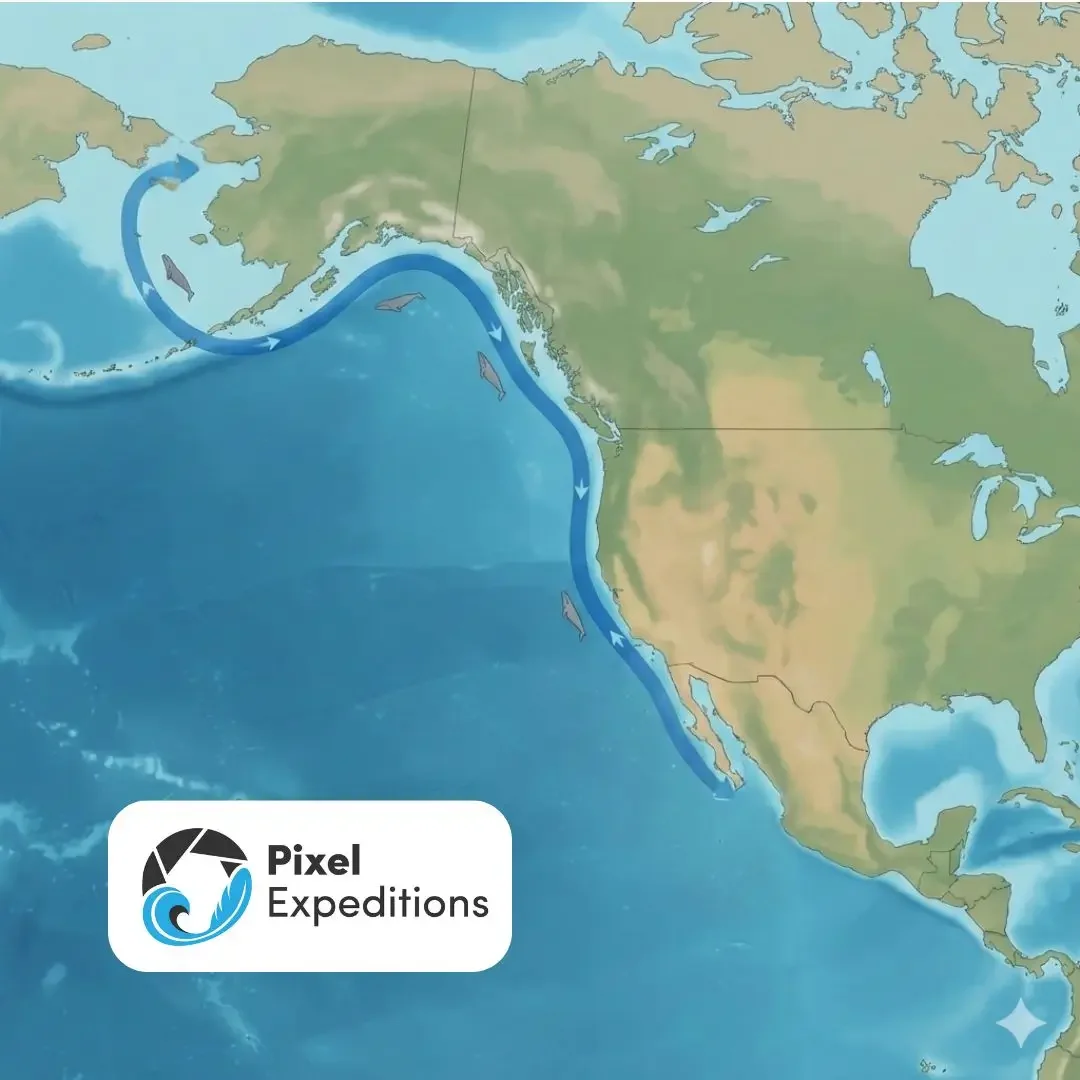
The Grey Whale Migration Route
To understand why Mexico whales are so special, you have to look at their commute. Every year, grey whales undertake a round-trip journey of roughly 16,000 to 22,000 kilometres (that’s 10,000 to 14,000 miles in old money!).
They begin in the nutrient-rich, icy waters of the Arctic’s Bering and Chukchi seas. During the northern summer, they feast on tiny crustaceans on the ocean floor, bulking up for the long road ahead. The ice begins to close in during October, and this is their cue to head south. They hug the coastline of North America, swimming day and night at a steady pace of about five miles per hour.
By the time they reach the warm lagoons of Baja California Sur, they have travelled the equivalent of halfway around the world. But why go through all that effort?
Well, the whale migration is driven by two primal needs: safety and family. We can all feel that, right? While the Arctic is great for eating, it’s a tough place to raise a baby. Did you know whale calves are born without the thick layer of blubber needed to survive freezing temperatures? Well, they are, and so by moving to the shallow, salty lagoons of Mexico, the mothers ensure their calves are born in a nursery that is warm and buoyant. It’s also thought that the lack of predators like orcas has a bearing on the journey.
Why Baja California Sur? (Whales Don’t Do Random)
The whales don't just stop anywhere along the coast. They seek out three very specific locations on the Pacific side of the Baja peninsula: Magdalena Bay, San Ignacio Lagoon, and Ojo de Liebre.
These aren't just scenic spots (although they are that too); they are biological fortresses that are relatively shallow and so easier to feed within.
Magdalena Bay: This is the southernmost major lagoon. It is a vast system of mangroves and sandbars that provides incredible protection. Because it is the closest to major towns like La Paz, it’s a popular entry point, yet it remains expansive enough to find quiet corners where the whales rest.
San Ignacio Lagoon: Often called the "heart" of the migration, this is a UNESCO World Heritage site. It is smaller and more remote, which often leads to more concentrated and intimate encounters.
Ojo de Liebre: Located furthest north, this is the largest of the lagoons. It often sees the highest number of whales; sometimes over 2,000 in a single season.
What makes these Baja whales so consistent is the water itself. The high salinity in these lagoons makes the water more buoyant, which helps the newborn calves stay afloat while they learn to swim and nurse. It’s the ultimate "baby pool" for a creature that weighs nearly a ton at birth.
Meet the Grey Whale: Gentle Giants With Personality
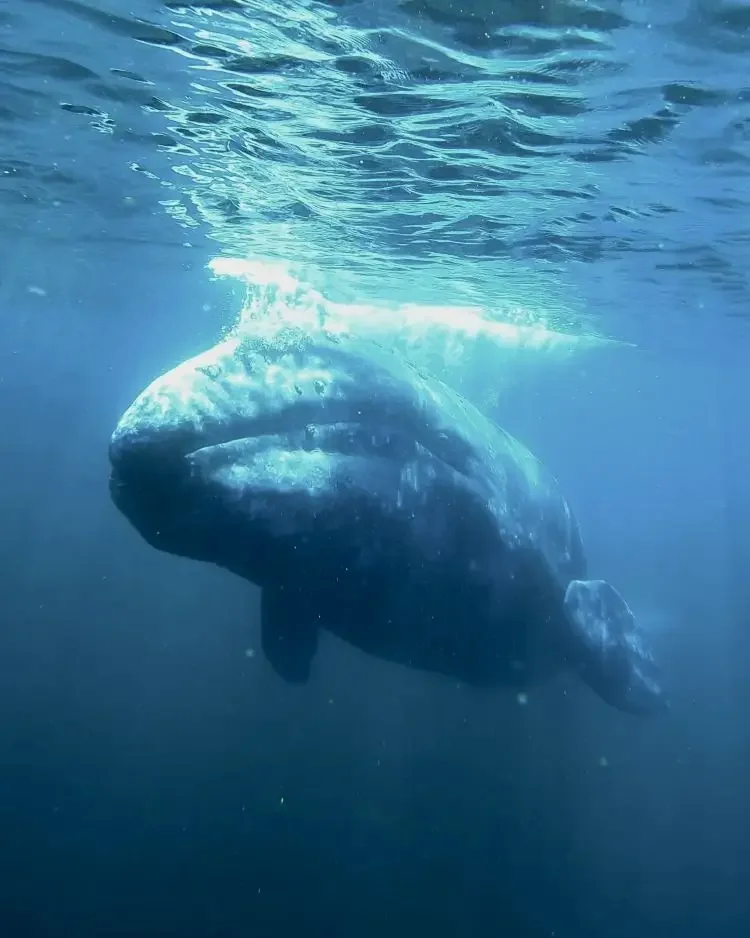
The grey whale’s mottled skin and distinctive white patches and barnacles are clearly visible. Photo credit Luke Coley.
If you’ve seen a Humpback or a Blue Whale, you’ll notice right away that the grey whale looks a bit different. They don’t have a dorsal fin on their back; instead, they have a series of "knuckles" or bumps leading down to their tail.
Their skin is a beautiful, mottled grey, often covered in a patchwork of barnacles and "whale lice." These aren't signs of sickness; they’re just part of the whale’s ecosystem. Up close, a grey whale looks like a living, breathing piece of the ocean floor.
But it’s their personality that truly sets them apart. In the 19th century, whalers called them "Devil Fish" because they would fight back fiercely to protect their young. Today, that reputation has been replaced by one of incredible curiosity.
The grey whale is famous for being friendly. In these lagoons, it is not uncommon for a mother to actually nudge her calf toward a boat, almost as if she’s introducing the youngster to the visitors. Who doesn’t like to show off their child, afterall. This behaviour started decades ago in San Ignacio Lagoon and has since become a hallmark of the Baja experience. The whales are curious, they’re gentle, and they seem to enjoy the interaction just as much as we do.
When Can You See the Grey Whale Migration?
Nature operates on its own clock, of course, but the whale migration follows a fairly predictable seasonal cycle. If you’re planning a trip to see whales in Baja, timing is everything.
January (The Arrival): The first whales usually arrive in late December. These are often the pregnant mothers, anxious to reach the safety of the lagoons before giving birth.
February to March (The Peak): This is the "golden window" (and yes, it’s when we are there). The lagoons are full of activity. You’ll see males competing for mates, mothers nursing their calves, and plenty of breaching (jumping out of the water to me and you), as well as "spy-hopping" (popping their heads up to look around).
April (The Departure): By late March, the single whales and males begin the long trek back north. The mothers and calves are the last to leave, staying as long as possible to let the babies grow strong and build up enough blubber for the journey to the Arctic.
Keep in mind that while you are almost guaranteed to see whales during the peak months, every day is different. Some days the whales are playful and approach the boats; other days they are more interested in sleeping or socialising with each other. That’s the beauty of wildlife, right? Just bear in mind that it’s a real interaction, not a performance.
Seeing Whales Responsibly: Why Sustainability Matters
At Pixel Expeditions, our philosophy is simple: we are guests in the whales' home. The whale migration is a sensitive time for these animals. Afterall, they’re mating, giving birth, and nursing, all activities that require immense amounts of energy and peace.
Sustainable tourism isn't just a buzzword here; it’s the only way to ensure these animals continue to return. In Baja, whale watching is strictly regulated by the Mexican government (CONANP). There are limits on the number of boats allowed in the lagoons, the speed they can travel, and how long they can stay near a whale.
When you visit with a responsible operator, you’re supporting a system where:
The whales choose the encounter: We never chase or corner an animal. We wait for them to approach us.
Local communities benefit: Most of the boat captains (the pangueros) are former fishermen who have become the fiercest protectors of the lagoons. By choosing ethical tours, you provide an economic incentive for conservation.
Noise is minimised: Keeping engines in neutral and avoiding sudden movements prevents stressing the mothers and calves.
We believe that a respectful encounter is always more powerful than one that is forced. When a 30-ton animal chooses to come to you, that connection is truly authentic!
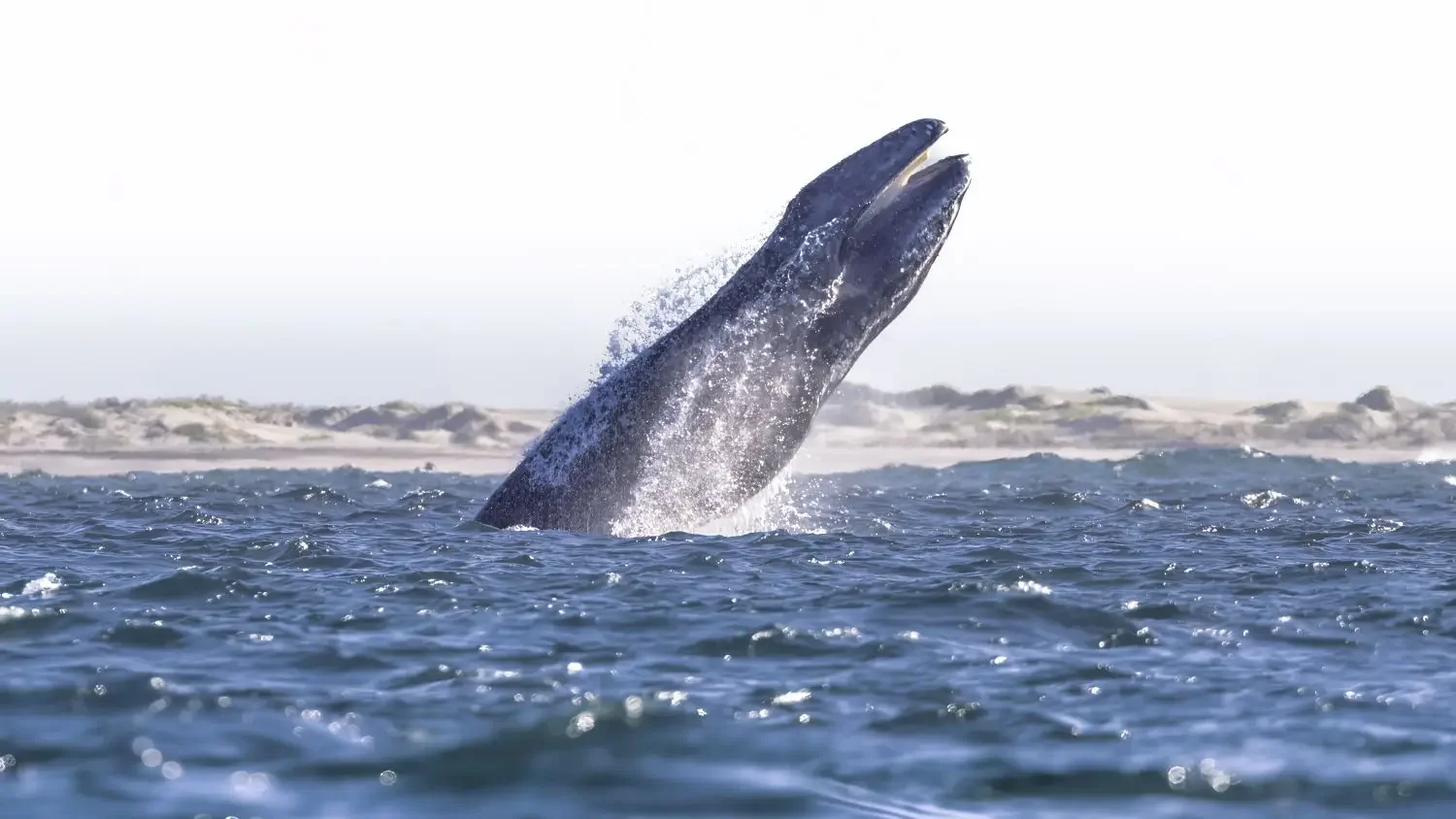
A massive grey whale breaching in a calm lagoon in Baja California Sur, Mexico. Photo credit Mike Rigney.
Why a Baja Whale Expedition Beats a Standard Whale-Watching Tour
There are plenty of places where you can buy a ticket, hop on a large boat with 100 other people, and look through binoculars at a distant spout. But that is not what we do at Pixel.
Our expeditions to see the Mexico whales are designed for people who want to feel the salt spray and hear the whale’s breath. We focus on:
Small Groups: We use traditional pangas, which are small, agile boats that sit low in the water. This puts you at eye level with the whales.
Remote Locations: We prefer the quieter corners of the lagoons, away from the crowds. This allows for a much more peaceful and profound experience.
A Slower Pace: We don’t rush from one sighting to the next. We take the time to observe behaviour, learn about the ecosystem, and simply sit and watch… and maybe take some photos.
Expert Knowledge: Because we spend our lives in these regions, from the jungles of Tulum to the deserts of Baja, we provide context that you won't get from a standard tour guide. We’ll talk about the geology, the local history, and the other wildlife, like the ospreys and sea lions that also share these waters.
Coming off our recent 2025 Mexican sardine run expedition, we’ve seen how much more impactful it is when travellers are treated as part of the story, rather than just observers.
Final Thoughts: A Migration Worth Following
The grey whale is a symbol of what is possible when we choose to protect the natural world. Once hunted to the brink of extinction, their populations have made an incredible recovery thanks to international cooperation and the protection of these Mexican lagoons.
In a world that often feels fast and disconnected, following the whale migration is a way to slow down. It’s a reminder that there are still great, ancient rhythms moving across our planet. Whether you’re watching a mother gently guide her calf or seeing a massive tail fluke disappear into the deep, you’re witnessing a journey that has continued for thousands of years.
We invite you to join us in Baja California Sur. Not just to "see a whale," but to experience the quiet, the wonder, and the connection that comes from meeting one of nature’s greatest travellers on its own terms.
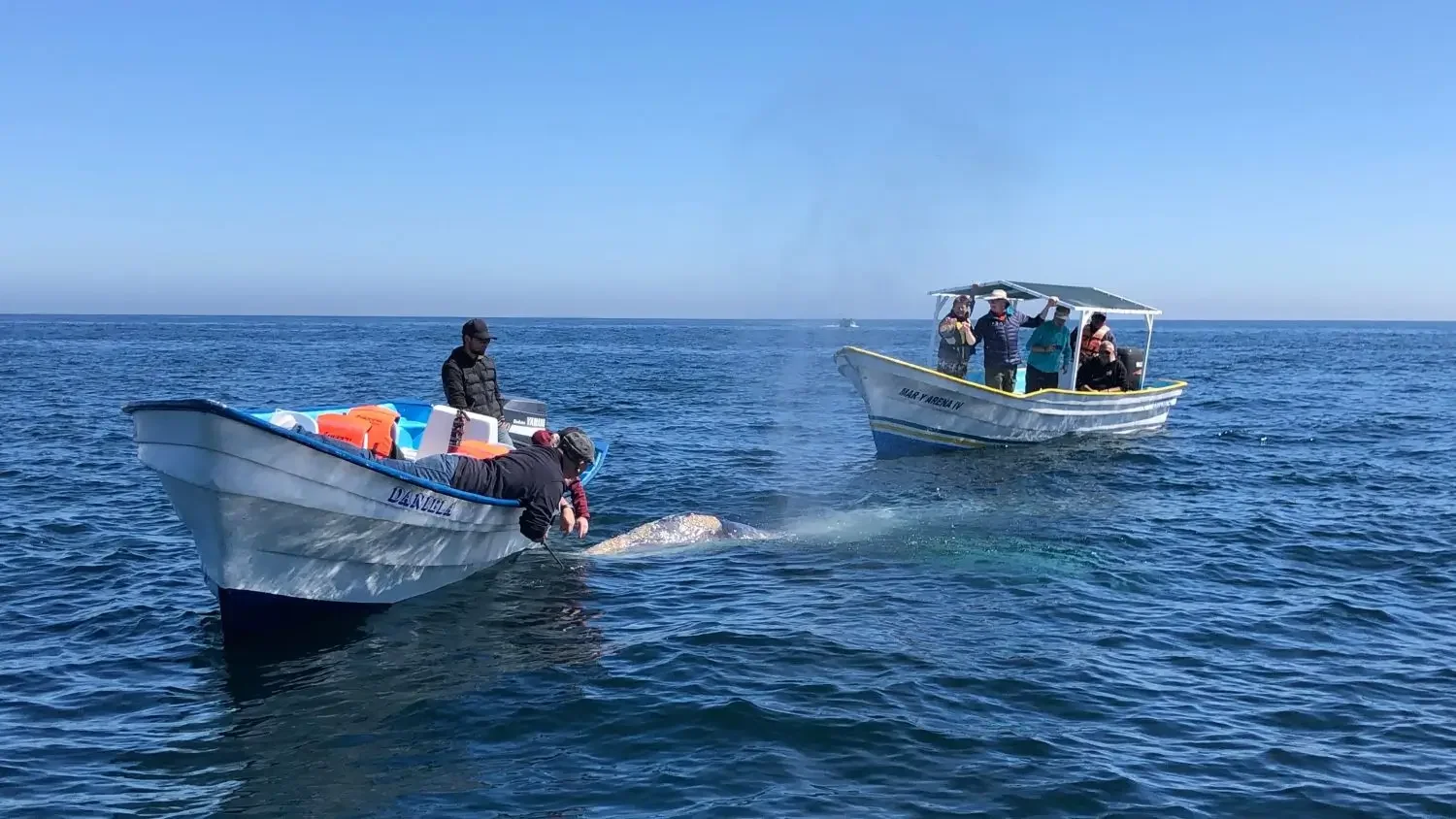
Guests on small pangas during a close encounter with a whale in Mexico. Photo credit Luke Coley.
Frequently Asked Questions
When is the absolute best time to see the whales?
While the migration season runs from late December through April, the sweet spot is typically February and March. During these months, the lagoons are at their most crowded… in the best way possible. This is when the highest number of mothers and calves are present, and the calves have grown curious and energetic enough to start approaching the boats. If you’re looking for those famous friendly interactions, this is your window.
Is it true that you can actually touch the whales?
This is the question everyone asks! The grey whales in these lagoons are famous for being friendly, often swimming right up to the pangas. While it is possible to touch them if they approach the boat, we always follow the rule that the encounter must be on the whale's terms. If a mother brings her calf to the boat and waits there, a gentle touch is often part of the experience. We never reach for or chase them; we wait for them to choose us.
What should I pack for a whale-watching trip?
Even though it’s Mexico, the Pacific breeze can be surprisingly chilly! We recommend:
Layers: A windbreaker or light waterproof jacket is essential.
Sun Protection: A hat with a chin strap (it gets windy!), polarised sunglasses to see through the glare, and reef-safe sunscreen.
Dry Bag: To keep your camera and phone safe from the occasional salt spray.
Footwear: Wear shoes that you don't mind getting a little wet during "wet landings" (also known simply as boarding from the beach).
Will we see other wildlife besides grey whales?
Absolutely. The Baja Peninsula is a biodiversity hotspot. Depending on the day and the specific lagoon, it’s common to see bottlenose dolphins, California sea lions, ospreys nesting, and various migratory shore birds. On our way to the lagoons, we sometimes spot the tracks of coyotes in the dunes as well. It’s a full-ecosystem experience.
How does whale watching affect the whales' well-being?
This is a core value for us at Pixel Expeditions. In Mexico, whale watching is strictly regulated by the government. There are limits on the number of boats, speeds, and interaction times. By choosing a responsible operator, you’re ensuring that the whales aren't stressed. Interestingly, many biologists believe these interactions are actually "enrichment" for the whales as they seem just as curious about us as we are about them! Plus, your visit provides a sustainable income for local families, making the whales more valuable alive than they ever were to the old whaling or fishing industries.
